All posts by Selim Ulug

Unknown's avatar

About Selim Ulug

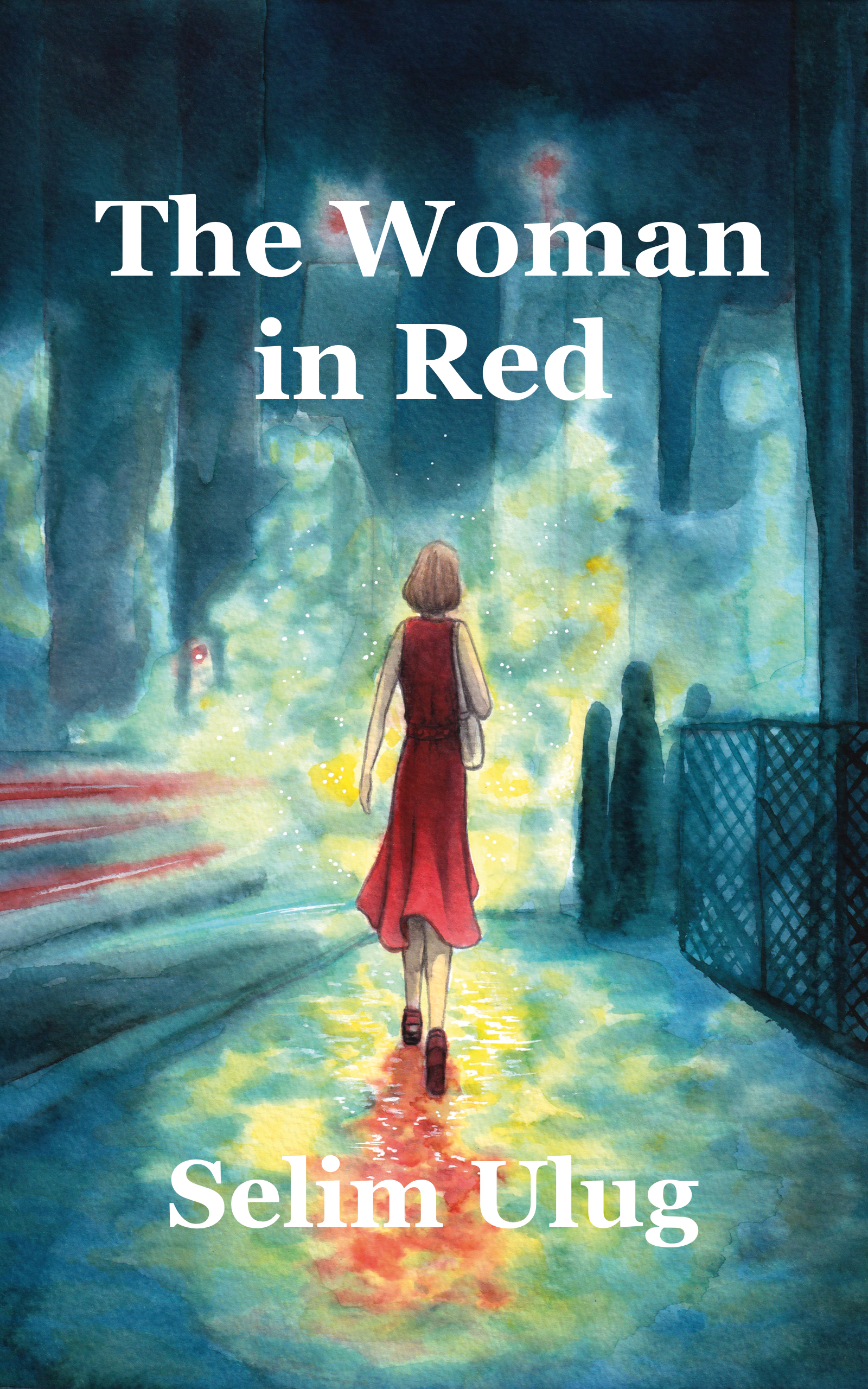
Author of the short story collections Something Special and The Woman in Red. Author of the Big Finish Short Trips Landbound and Battle Scars.

Panic in the Cave

When I think of 2019, I think of it as The Before Times. Before the world was frozen in time while researchers scrambled for a vaccine to beat back the beast known as COVID. Some pretty good things happened that year, including my first visit to a Doctor Who convention. I had the pleasure of attending Chicago TARDIS and enjoyed an all-too-brief encounter with Katy Manning.

Katy, of course, was Jo Grant, assistant to the third Doctor, played with panache by Jon Pertwee. Katy left the show after her character married environmentalist Clifford Jones. She has since played Jo Grant and Jo Jones many times for Big Finish.

She was a delight on the show and an even bigger delight in person, doling out hugs to all the fans who lined up for autographs. As we chatted, I might have let slip that I’d written a couple of stories for Big Finish. After all, “Battle Scars”, my second Short Trip for Big Finish, was released just a few months earlier. She narrated Short Trips sometimes, she said, and suggested I write one for her.

A story idea came to me almost immediately. I let it percolate until late last year when I decided to go ahead and write it as fan fiction. As I do these days when I get the urge to write Doctor Who. If there was any chance that Katy would narrate the story, I would have centred it around Jo Jones and Kate Stewart. However, since the story was going to be fan fiction, I decided that it would feature Jo Grant and the Brigadier, and as the story progressed they would bond with each other and gain a measure of mutual respect. The result is a short story called “Panic in the Cave.” It’s hosted by the Doctor Who Project.

Something is stirring in the cave system beneath Yorkshire. Locals are near deafened by eruptions of bone-rattling sound, and tremors have been reported, sufficient to split the earth and swallow vehicles. Before he can be notified, the Doctor takes his TARDIS for its first test flight since the Omega affair. Jo Grant, eager to prove her worth to the Brigadier, insists upon her involvement in the investigation. But, without the Doctor’s support, will she be able to face her fears and confront the unknown?

The Doctor Who Project hosts edited fan fiction stories which are set in alternative timeline. They also host “Brief Encounters” which are short stories set in the “classic” Doctor Who timeline. The editors had some good suggestions for improving my story. Do check the site out.

And please have a look at “Panic in the Cave” and let me know what you think of it.

Star Trek Picard: Second Self

I knew a guy who, before purchasing a book, read the last couple of pages. Why would you do that? I asked him. Wouldn’t that spoil the whole thing? Because, he said, why would I read a book if I don’t like the ending?

Fast forward to the present, where I’ve been listening to January LaVoy’s narration of Una McCormack’s Star Trek Picard: Second Self. I started at the beginning, but even before reaching the end, I knew that I could recommend this book without hesitation. Doubly true now that I’ve listened to the whole thing.

To be honest, I don’t often enjoy spin-off novels. There are exceptions, most notably Timothy Zahn’s Thrawn trilogy. And there are others I’ve enjoyed, including some Star Trek and Doctor Who novels, but Second Self is something special. Why is that?

Well, for one thing, it’s clearly a book for adults, or at least for the older YA crowd, with its mature themes of war-time atrocities and drug addiction. This book has other things going for it. Motivations are clear. There is a lot of inner dialog which expands our appreciation of Raffi’s (Raffaela Musikerz) character. Backstory, of which Star Trek has untold volumes, is provided as required without overwhelming the current story.

Second Self concerns Raffi, who, at the behest of Admiral Jean-Luc Picard, undertakes an off-books mission to bring a war criminal to justice. The problem is, intelligence reports have the criminal last seen on Ordeve, a planet with which Raffi has unhappy associations. The focus of the book later shifts to Raffi’s earlier time on Ordeve, and then to events that occurred before that. It’s a good story-telling technique, motivating us to understand what went before.

Aside from the very effective prose, there’s January LaVoy’s exquisite narration, with so many voices that you’d almost swear that this was a full-cast audio. I’ll be looking for more audio books narrated by this voice actor.

To be honest, I picked up this audio book because it was on sale. Now that I’ve listened to it, I would happily pay full price. Pick up a copy or listen to the audio version. If you enjoy Star Trek, you’ll be glad you read Second Self.

Star Wars: The Motivation Problem

This post contains SPOILERS for Star Wars: The Acolyte

If you’ve listened to “Landbound“, the Doctor Who Short Trip I wrote for Big Finish, you’ll know that it begins with the Third Doctor driving off in a temper from Unit HQ until he finds himself at the seaside in Whitby. In my first draft, the Doctor was simply having a bad day and was fed up with the Brigadier and his rules and regulations. Ian Atkins, my editor, suggested making the reason for the Doctor’s anger clearer by setting the opening right after the TV episode, “The Silurians.”

The Silurians, an intelligent, lizard-like race, ruled the world before humans came along. They’ve since been in hibernation. In the episode, they awake and wish to resume their place on the Earth’s surface. The Doctor tries to achieve a peaceful solution only to have his efforts undermined by the Brigadier, who seals them underground and likely kills them all in the process. The Doctor, of course, is furious.

With that change, the reason for the Doctor’s anger in “Landbound” begins becomes much clearer. And clear motivation, I’ve learned, is key to good storytelling.

Which brings us to Star Wars: The Acolyte, the latest Star Wars series from Disney, in which very few character motivations are clear. For instance, the Jedi are shocked — shocked! — that the Witches of Brendok are raising two children. I wonder where they thought big witches came from if not little witches. Are the witches inherently evil? Or just different. Or does different equate to evil? Do witches roam the galaxy, turning people into newts? Why is it so very important to the Jedi to remove these children from the witches? Particularly since these not-so-old children are apparently too old to train.

What motivates Torbin, the Jedi who instigated the awful events on Brendok? Why is he so whiny? Why does he want so badly to return to Coruscant? Why does he wear his heart on his sleeve when the mission of the Jedi seems to be to drum emotion out of their students (more on that in my next post)? Why does he wantonly disregard his master? Is he campaigning for Worst Padawan Ever?

There’s a tracker in the show, a diminutive creature with a great sense of smell. He’s not just a dog on two legs, though. He’s quite handy with technology as it turns out, and effectively caused Sol’s ship to crash-land. What’s his story? How does he communicate with people? Why does he do what he does?

In the final episode, Osha and “the Stranger” leave but apparently they simply must leave Mae behind. Why is that? Is the ship not big enough for three? Is it that a Sith can only have one apprentice at a time? Enquiring minds want to know, and it wouldn’t have taken long to explain.

There are other questions, of course, but I won’t list them all. Except to question Jedi Master Vernestra Rwoh, and her desire to hide what’s going on in Acolyte from the Jedi Council.

There are a lot of screen writers out there and by all accounts it’s nearly impossible to get a treatment to the point of actual production. Studios, it seems, have the luxury of selecting from the best of the best. Given that, I’ll end with a final question: why would Disney accept a script in which reasonably clear motivation is so lacking?

What Day is it?

It’s Missy’s Day!

Missy was the 12th Doctor’s antagonist, a version of the Master in female form. Played delightfully by Michelle Gomez, Missy could be alternately cold-blooded and playfully witty. She was different from her previous incarnations in that, in her own, stumbling way, she wanted to regain the Doctor’s friendship.

I wrote “Missy’s Day” during COVID lockdown and found it a very welcome diversion and I greatly enjoyed the writing of it. Follow the link to read it. I hope you enjoy it.

Missy’s Day

Being There

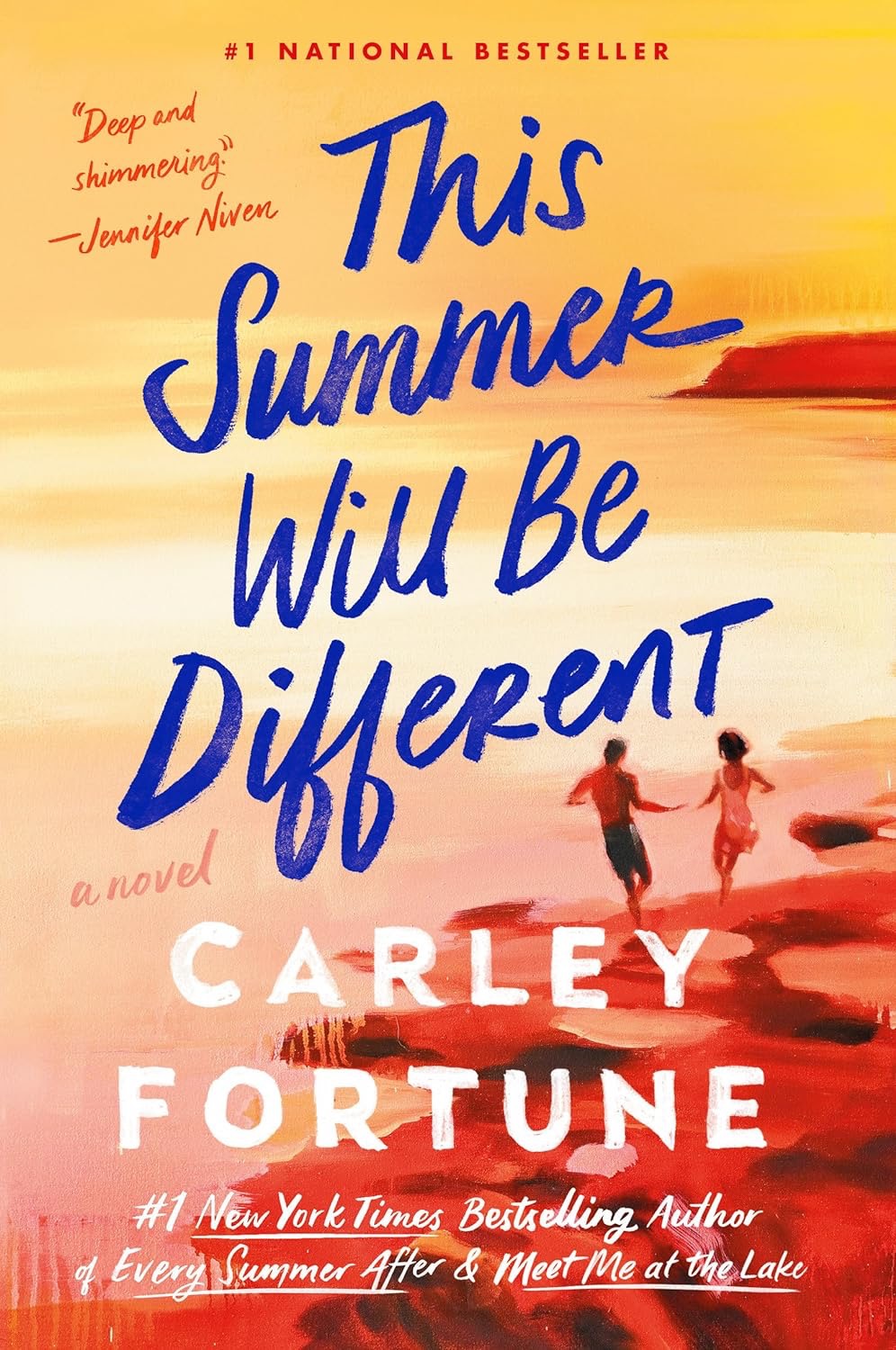
This Summer Will Be Different is a novel by Canadian writer Carley Fortune. More specifically, it’s a romance novel.

As you might know, romance isn’t my go-to genre. I explored romance a bit when I was trying to find myself as a writer. You see, my most popular fan fiction stories were the “mature” ones, the ones where amorous things happened. Was I a budding romance writer? After sampling a few novels in the genre, I decided that no, I wasn’t.

So, with that in mind, why did I choose to read this novel? And why did I enjoy it so much?

It started with an article on the CBC’s website about the author. Specifically, it was about Fortune’s use of setting to put the reader there, so that you see, smell, and feel the emotional reaction of the protagonist to the setting.

This interested me greatly. Even though my current project is a thriller, surely the thrill would only improve to the extent that the reader feels part of the action. If they are there.

The setting for This Summer Will Be Different is alternately Toronto and Prince Edward Island over the course of several years. When we meet PEI for the first time, it is described thusly:

Water glittering like sapphires beneath rust-coloured cliffs. Seaweed lying in knotty nests on a strip of sandy shoreline. A wood-sided restaurant. Stacks of lobster traps. A man in hip waders.

Sea brine filled my nose and the putt-putt of a fishing boat my ears. A salt-kissed breeze sent the skirt of my dress flapping against my calves, and I smiled.

This was protagonist Lucy Ashby’s first impression of PEI, and I think we’ve got pretty much all the senses accounted for. More importantly, you can imagine yourself right there with her. In the story, PEI is more than a place. It’s almost another character, one with the power to calm and heal.

In Toronto, Lucy, the owner of a flower shop, is always working, always micromanaging, always worrying. This contrasts to her time in PEI, where she can stop to breathe in the smells of the ocean and the local flowers and walk barefoot in the red-tinged sand. The contrast between the two settings is very effective.

As for the actual characters in Summer, I found them believable, fleshed-out, and three-dimensional. My only quibble is with Lucy’s love-to-be, who’s maybe too perfect, with his long, wavy hair, blue eyes, muscular, cleft in chin, facial stubble, and did he have washboard abs? Probably.

With Felix and Lucy, it was definitely a case of lust at first sight. But what about later? Their relationship has ups and downs and it feels believable. They both grow and change, but Lucy has the most growing up to do. In particular, she needs to work out how to let go, how to trust, and how to understand what she really wants from life.

A romance novel needs to be quite sensual, not just in terms of sex, but in the way it fills the senses. The smell of a place. The taste of the food. The sound of the surroundings. The pace is more leisurely and there’s space for a lot of description and internal monologue. As I mentioned, my current project is a thriller, a novel called A Familiar Voice. For a thriller, the pace is faster, and too much lingering, too much descriptive prose runs the risk of the reader losing interest.

It’s going to be interesting to find the right balance. I do want the novel to have a palpable sense of place, just as long as I can keep everyone interested in reading to find out what happens next.

I’m glad I read This Summer Will Be Different and encourage other writers to leave your comfort zone and treat your senses with this novel.

Remember Me?

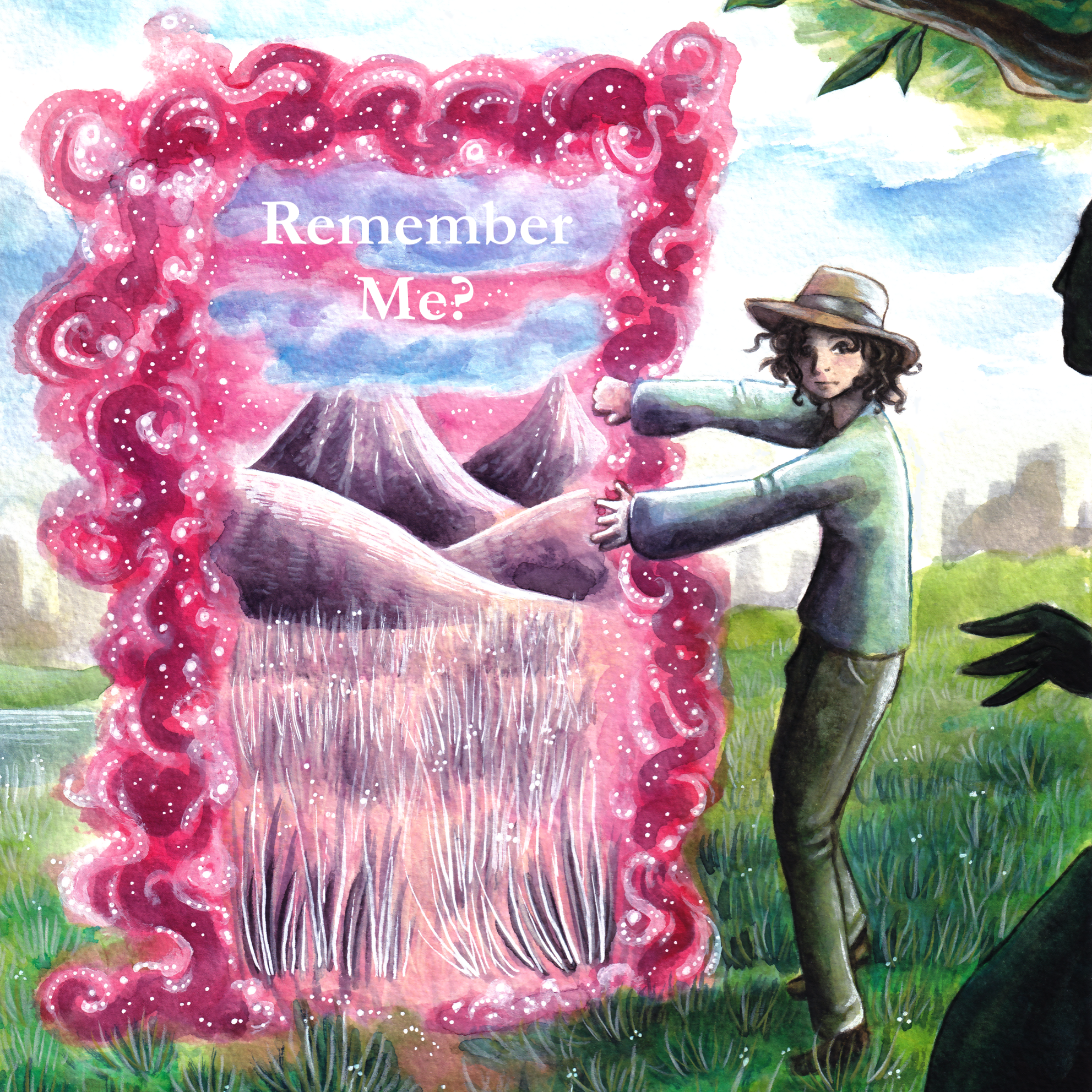
If you remember my short story collection, Something Special, then you might remember a story therein called “Remember Me?” It was one of my favourites.

The story concerns Will Fallon, a man muddling his way through life, and his encounter with Susan Follows, a woman who claims she can travel between worlds. Susan wants to take Will’s cat away.

Puzzled at his lack of success with relationships, Will isn’t quick to trust. “Remember Me?” is really about him learning to open up to people and to the wonders in our every day lives.

I first envisioned “Remember Me?” as a Doctor Who story from the point of view of a companion who gets left behind. But that was just the begining. I wanted to do more with the story, take it in a different direction.

The Something Special version of the story is set in Kingston, Ontario. When TT Productions 23 agreed to produce an audio version, I moved the setting to London, UK, and Will meets Susan in Kensington Park near the statue of Peter Pan, a location that I adore.

The audio version is otherwise nearly identical to the original, with the exception of an opening scene that I added to set the stage for what was to come.

Abi Louise, TT Producer and jack-of-all-trades extraordinaire, assembled a small but stellar cast, including Connor Sumner, Vanessa McAuley, and Ellaika Villegas. They nailed their lines on the first take. As is often the case, the actors breathed new life into the story, in ways that I found surprisingly touching. I mean, considering that I wrote the thing.

I hope you give the audio a listen and if you like it, please tell your friends. If you’d like to learn what happens next, there’s a sequel to “Remember Me?” in my second collection, The Woman in Red.

Something Special audio on YouTube

Something Special and The Woman in Red are available at your regional Amazon store. Go to the store and search for “Selim Ulug.”

The Perils of Writing Doctor Who

Some things are not meant for the faint of heart. Writing Doctor Who is one of them.

Consider why you’re writing Doctor Who in the first place. We’re in the 21st century and you’re writing Doctor Who because the show is very successful. In fact, it has sixty years of history. Sixty years. There have been TV episodes, novels, comics, not to mention audio plays and books from Big Finish and the BBC. Even through the wilderness years, after the show was cancelled, there were many stories, including the TV movie. That’s a lot of content.

How does one get one’s head around it all? Short answer: you can’t.

How much of that content is canon? What is canon, anyway? The answer to that depends on who you are writing for. In all cases, the TV episodes are canon (mostly). Depending on the TV showrunner, some Big Finish might be canon. If you’re writing for Big Finish, previous Big Finish will be canon. I’ve always preferred the TARDIS wiki’s approach. For them, the question is meaningless. There is no canon. I mean, just think about it. We’re talking, after all, about a show in which time can be rewritten and the entire universe can be rebooted.

Let’s say you’ve got your head around all of that, and you’ve written a story that’s wonderful. Perfect. It has thrills. It has chills. It has humour and pathos and tragedy all rolled into one. And it’s published. That’s where Doctor Who fandom, bless their collective hearts, come in. I will always be grateful that my Big Finish stories were greeted with mostly positive comments. But whenever you put your writing out there, you’re taking a risk. Fans might love it. They might hate it. They might say, “meh.” Some might accuse you of ruining Doctor Who, or ruining their childhood, or being “woke” (heaven forbid). You just don’t know. I don’t have an answer for how you prepare yourself, except that, if you truly believe in what you’ve written, then the rest will fall into place.

It might sound as if I’m being negative, and I don’t mean to be. But I do want to be realistic. Being asked to write Doctor Who is a huge thrill. You might even say it’s the trip of a lifetime. I humbly suggest that, if you’re given the chance, you buckle in and enjoy the ride.

But what, you might wonder, is the worst thing about writing Doctor Who? Easy: it’s addictive. Despite all of the above, you never want to stop.

The Tinselator – The Complete Tale

Some time ago, I posted a partial version of my Christmas tale, The Tinselator, to this site. What follows is the complete story as it appears in my collection, The Woman in Red. My way of wishing you all a very Merry Christmas!

At our house, to add tinsel to a Christmas tree is to tinselate the tree. And from this came the following Christmas fantasy. In answer to the obvious question, yes, of course Santa’s real. Santa Claus is the manifestation of our collective love of children. How much more real does it get?

It was the steady beat that woke her.

Dum … dum … dum … dum….

Kaylee sat up in bed and rubbed her eyes. With the night light on her bedside table, she could make out the clock on her wall. Five minutes after twelve. After midnight.
It couldn’t be. Could it? Was Santa Claus in the house?

Dum … dum … dum … dum….

It didn’t sound like any Christmas music she’d heard. But Mommy said there were new Christmas songs every year, so … maybe?

Lifting the covers off, she swung her legs round, stood on the hardwood floor, and put on her slippers. The big toe of her left foot wriggled in the open air. Mommy said that maybe she’d get a new pair for Christmas.

As she glanced at her feet, she noticed that her pyjama bottoms had ridden up her calf. Tugging at them, she was surprised that they wouldn’t go any lower. It was the same with the sleeves of her top—they had ridden a couple of inches up her arms. Was she bigger? Or had the pyjamas shrunk since she went to bed? She heard the sound again, and that drove way any thoughts of growing or shrinking.

Dum … dum … dum … dum …

After grabbing Panda, Kaylee stuck her head out in the hallway and listened. There it was again.

Dum … dum … dum … dum …

It was coming from the living room, which was to her left. To her right was Mommy’s room. She should wake Mommy up. Yes, that would be the right thing to do. Except that Kaylee was curious. Very curious. She would tiptoe and be very quiet and just have a peek and then come back and wake up Mommy. If anything was wrong.

Dum … dum … dum … dum….

Peering around the corner, she noted that the living room was dimly illuminated by street lamps through the thin curtains. There was the Christmas tree in the corner, sparse of limb and decoration, but Kaylee loved it. Beneath the tree were a few presents in wrapping paper or stuffed into bags and topped with colourful tissue paper. They’d been there for a few days, and Kaylee knew that the wrapping paper was a patchwork of used wrapping from previous years. To her eyes, that simply made them more beautiful.

The empty stockings were lying on the floor against the outer wall. Santa just fills the stockings, Mommy had told her. Kaylee’s friends had told her that Santa wasn’t real, and she believed them. But she hadn’t told Mommy yet.

Something moved from a dark shadow in the corner of the room. A man! A tall man. He was wearing a black leather jacket, dark pants, and boots. His hair kind of stood up on end and, even though it was dark, he was wearing sunglasses. And he had a really, really big gun.

“You’re not Santa,” Kaylee observed as she stepped into the living room.

The big man swung around and fixed his gaze upon her.

“Correct,” he said.

“What are you doing here?”

“Your home has been targeted for tinselation,” he monotoned.

Dum … dum … dum … dum …

“What’s that noise?”

“My gun needs to charge,” said the man as if that was an explanation.

There was silence for a moment while the man and child regarded each other.
With a tilt of his head, the man asked, “What is your name?”

“Kaylee.”

“How old are you, Kaylee?”

“Five.”

After another period of silence during which the man cast his eyes about the room, he said, “You are poor, Kaylee.”

This was a sensitive topic. The kids at school teased Kaylee for all she didn’t have compared to them and their rich families.

“No, we’re not!” she said, stamping her foot on the ground to emphasize the point.

“The curtains have been patched by hand seven times. The furniture is scratched and old, probably purchased second-hand. Your slippers barely fit and one of them has a hole at the toe. This room is tidy, but judging by the amount of dust, your mother doesn’t have time for housework. Likely because she has more than one job. She does this to provide you with what she can. Conclusion, she loves you. You defended your mother by denying that you were poor. Conclusion, you love your mother as well.”

The anger Kaylee felt left her, leaving her teary-eyed. “Mommy does have two jobs. She works at Walmart and Loblaws for lots of hours every day. She tries really hard. And she’s good to me when she’s here. She helps with my homework, takes care of me when I’m sick. My mommy is the best mommy there is. Even if we’re poor.”

“Remember: if you are loved, you are rich by every measure that matters. If a child is not loved, even though their family is wealthy, they are the worst kind of poor.”

Her eyes wide, Kaylee said, “You’re very smart.”

“Of course. I am a tinselator.”

Dum … dum … dum … dum …

This time the sound was followed by a soft chime.

“It is time,” said the man, hefting his gun and pointing it at the tree.

In a quivering voice, Kaylee said, “You—you’re going to shoot the Christmas tree?”

With the ghost of a lopsided smile, the man said, “Trust me.”

Kaylee heard a whoosh, as from a strong breeze, and then a ball of silver emerged from the gun. It slowly rose to just above the top of the tree, then fell onto it, breaking into long silver strands that covered the tree from top to bottom.

The tinsel glowed, even in the dim light. Kaylee felt her face glowing as well. “It’s beautiful,” she said.

The man turned and stepped toward the shadows from which he’d emerged. And then he was gone.

Kaylee was soon nestled back in bed with Panda, her eyes wide with wonder. Sleep seemed a long ways away. Still, she eventually found herself starting to doze. But another sound jolted her awake. It was coming from above. Were those … hooves on the rooftop?

With a yawn, Kaylee thought, How’s a girl supposed to get any sleep around here?

Kaylee sat bolt upright in bed. That wasn’t something she would say. Was it? It was darker than it should be. The nightlight had gone out, she realized. Still, there was just enough light to see that she was no longer wearing her Pokémon pyjamas. Now she was clad in plain green top and bottoms. She felt her hair. It was longer, shoulder length. Hadn’t she had a pixie cut when she was up earlier?

Getting out of bed and standing next to the chest of drawers, Kaylee could see over the top, something she couldn’t do earlier.

But wait. She’d been five years old when the tinselator came. Now she was … eleven. That’s right. She must have been dreaming about when he’d come, and had just now been awakened by some other noise.

Of course, she was a lot older now, and didn’t believe that a magical being had come to decorate the tree. Obviously, it was a man, a normal man, some friend of Mom’s who’d played a trick.

After noticing that the sounds on the roof had stopped, Kaylee felt rather than heard something soft and heavy landing on the floor somewhere in the house.

Once again, she peered out the bedroom door, considered waking her mother, and instead crept towards the living room. It hadn’t changed very much since she was five. Her mother had bought some new curtains. Or rather, she’d bought some material and had fashioned curtains from them. They were still thin, though, and she could easily see the contents of the room from the streetlights shining in.

All was as it should be: sofa, chair, coffee table, the TV and the plant stand. It’s just that there was something there that didn’t belong: a man, dressed in red, with snow white hair and beard, and wearing white gloves. Next to him on the floor was an enormous, bulging sack, standing about five feet high, tied-off at the top with rope.

The man was snuffling and scratching his head as he looked at a long piece of paper.

“You’re not Santa Claus,” Kaylee pronounced.

The man started, dropped the paper, and stood up. “I’m not?” he said.

“No. You’re not Santa Claus because there’s no such person.” Kaylee said as she crossed her arms.

The man looked down, scratched his head again, and said, “That’s funny. That’s very funny. Because I’m quite sure that I was Santa Claus when I left the North Pole. Yes, I definitely remember Mrs. Claus fastening the top button of my coat before I left. She said, ‘Now then Santa, you’ll be just fine without me. After all, you’ve been doing this for over 2,000 years.’ So, you see, I must be Santa Claus. The problem is, even though I have been doing this a very long time, things always change. People move around, new children are born, other children grow too old for my toys, it all becomes such a muddle.”

His eyes began to tear up and he withdrew a handkerchief and gave his nose a loud blow.
Finding that she was starting to feel sad for the man, Kaylee spoke in a softer voice. “But how do I know that you’re Santa? You could be anyone in a red suit with a big sack.”

Now the man’s eyes began to twinkle. “Oh, but this isn’t just any old sack. Come here and I’ll give you a peek inside.”

After untying the rope, the man gave the sack a tug with both hands, opening the top to its full width. Then he tilted the sack a bit so that Kaylee, who’d cautiously approached, could peer inside.

The inside of the sack seemed endless, filled with packages wrapped in all patterns and colours of paper, and tied with ribbon. Wide-eyed, Kaylee looked up at the man, who was smiling now, and then back into the depths of the sack. The longer she looked, the deeper it seemed, going far past the living room floor, past the ground underneath the basement, and much further down than that.

Kaylee staggered backward and sat on the chair. She had to swallow before she could speak as her mouth had become very dry. “You—you are Santa Claus.”

“Yes, my dear, I believe that I am. And you are Kaylee, are you not?”

Kaylee nodded, not surprised, after what she’d just seen, that he knew her name. Eyes still wide, she regarded Santa as he sat upon the sofa and picked up the paper he’d dropped, turning it one way, then another, until, with a sigh, he set it on the coffee table.
“It’s no good,” he said, voice heavy with defeat. “Mrs. Claus always does the organizing. She knows which houses to visit in which order and what presents to leave. She even wrote it down for me. But it’s beyond me. I don’t know what I’m going to do.”

“Why couldn’t she come with you?” said Kaylee.

“Well, it’s her sister,” said Santa. “She’s the North Star, you know. She’s been feeling a bit dull, and Mrs. Claus has gone to help her to feel brighter.” Santa sighed again.

Curious, Kaylee moved to the sofa and picked up the instructions. They were written upon a sheet of legal-size paper with red ink. But the language wasn’t English. In fact, it wasn’t any language at all as far as Kaylee could tell. It was all symbols: stars, triangles, rectangles with inner circles and stars of various sizes within the circles. To make things worse, the symbols were in motion, slowly navigating across the width and length of the page. Some faded into nothing while others slowly appeared. She had no idea what to make of it.

Except … except that the longer Kaylee looked at the page, the more she got the feeling that the symbols were speaking to her. Singing to her in fact, as she began to hear a soft melody that spoke to her of hope and love and peace.

And now she understood. It all made perfect sense.

“Don’t worry, Santa,” said Kaylee. “I can help you. I understand exactly what you need to do.”
“Do you? Do you really? Oh, Kaylee, that’s wonderful. Why, that’s the best Christmas gift I could have asked for. Would you be able to come with me, do you think, while I do my rounds? You’ll be perfectly safe, and it will take no time at all.”

“No time to visit every house where they celebrate Christmas?” Kaylee couldn’t help the skepticism in her voice.

“Exactly. Because we’ll be out of time, you see. What I mean to say is, we won’t be running out of time, we’ll literally be outside of time so that, on Earth, no time will have passed at all.”
This was almost too much for Kaylee. So much of what she believed about the world had changed in just a few minutes. But what choice was there? If she didn’t help, children all over the world would wake up disappointed. She’d watched a movie with her best friend Sheila where one of the characters said, “There’s no decision to make.” Right now, she realized, there really wasn’t.

“Yes, I’ll come with you. Um … will we be starting off here?”

Santa stood and let out a loud “Ho ho ho! Of course we will. Now tell me, what am I to leave for you this year?”

Picking up the list, Kaylee told him. Then, after Santa had filled her stocking, they and the sack full of gifts were on the roof of her house. Santa introduced her to each of the reindeer. Some licked her hand, others nuzzled their head against her. Finally, after mounting the sleigh, they were on their way. And at each stop, Kaylee told Santa what gifts he was to leave and where the next stop was.

Kaylee didn’t remember coming back home. But she must have done, because the next thing she knew her mother was at the door telling her to “rise and shine.” It was Christmas morning.
That was unusual. Kaylee was always the first one awake on Christmas, and would run into her mother’s bedroom and climb into her bed, poking at her mother until she let Kaylee lead her by the hand to the living room and the Christmas tree.

It almost wasn’t a surprise to see that things had changed again. She was now wearing a red tank top and white bottoms dotted with red hearts. And she was taller yet again. And there were other changes.

But of course. She was eighteen, not eleven. She’d been dreaming, remembering dreams she’d had when she was younger.

After the presents were opened and as they were finishing their breakfast of pancakes and sausages, Kaylee said, “Do you remember when we woke up on Christmas and the tree had been decorated with tinsel?”

“Yes, of course I do,” said her mother. “What a nice surprise that was. You’d brought some tinsel home from school and put it on the tree while I was asleep.”

“Um, no, that’s not what happened. You’d had a boyfriend staying over, right? And he put tinsel on the tree.”

Her mother nearly choked on her pancake. “Not quite, Sweetie. The very first time I had someone stay over was when you were sixteen.”

Kaylee set down her fork. “Are you sure?”

With a smile, her mother said, “Do you think I’d forget something like that? No, Dear, the first time was when you were sixteen.”

“But then … who put tinsel on the tree?”

“It wasn’t you?” said her mother.

“No. He called himself—“ Kaylee cut herself off.

“What was that name you made up?” her mother said. “It was really cute. Oh yes, you called him the Tinselator.”

Kaylee didn’t answer. Instead, she straightened and looked around her. “Do you hear that?” Kaylee said. “That music? I’ve heard it before.”

After a moment of silence her mother shook her head. “No, Dear, I don’t hear a thing.”

“I’ll be right back,” said Kaylee, and set off to follow the sound. It became clearer and more pronounced as she left the kitchen and approached the living room. Turning her head slowly to the left and right, she followed the faint music to the Christmas tree. She hadn’t noticed before, but there was a red envelope on the wall-facing side of the tree. The music was louder now. Taking the envelope, she opened it and withdrew a white sheet of paper with red markings.
That’s when she called for her mother with a choked scream.

Her mother arrived in seconds. Kaylee held up the page for her to see. It was a legal-size sheet of paper, with red symbols drawn upon it. Symbols which moved about the page on their own volition.

Her mother’s jaw dropped. “What is this? How are you doing this?”

“It’s not me,” said Kaylee.

They both looked at the paper for a few seconds, until the symbols began to fade. They were replaced with red letters that spelled: “Merry Christmas, Kaylee, from Santa and my dear friend, the Tinselator.” A few seconds later, the letters disappeared, leaving Kaylee with a blank page.

“What does this mean?” her mother whispered.

Kaylee smiled and reached to give her mother a tight embrace. With her head resting on her mother’s shoulder, Kaylee said, “It was real. They’re real. The Tinselator and Santa Claus. I thought they were just dreams. Oh, thank you Santa. Best. Gift. Ever.”

On the Beach

Contains MASSIVE spoilers for the Silo stories and the Silo TV series.

The Silo series by Hugh Howey is a modern masterpiece of post-apocalyptic SF. The books form a trilogy with Wool, Shift and Dust. In addition, there are a trio of short stories included in the Silo Series eBook: “In the Air,” “In the Mountain,” and “In the Woods.”

It’s fair, I think, to say that Mr. Howey has a somewhat dim view of humanity. So dim, in fact, that one almost wonders why anyone in the story would bother trying to save humankind.

I did mention above that there are massive spoilers, right? So here goes.

The end of Dust gave us a bittersweet ending, in which most of the characters we’ve come to know are dead, but those who survive, including Juliette Nichols, find their way to a natural paradise.

The story “In the Woods” takes that away from us, and Juliette is seemingly killed by a pair of survivors who, filled with blind hate and anger, have mistakenly assumed that Juliette is the author of humanity’s destruction.

That’s where I said, “Nope.”

So, I’ve written a brief coda which gives me back a more hopeful view of the future in the world of Silo. I hope you enjoy it.


On the Beach

“So, how fast could they fly?” Jimmy, still known as Solo by much of the community, sat next to Charlotte scratching his head. 

“About mach 12 was the fastest that I know of,” Charlotte explained. Kneeling, she had been drawing diagrams in the sand. She found Jimmy surprisingly conversant with the basic principles of flying through his reading. The practice, or rather, the stories about the practice, seemed to perplex him. 

“What does that mean?”

“Mach 1 is the speed of sound. The speed at which sound travels through the air from point A to point B. When a plane flies faster than Mach 1, they used to say that they broke the sound barrier. You’d hear a loud ‘BOOM’ in the sky.”

“People must have loved that. Or did they get used to it?”

“There were rules about flying near cities—”

Charlotte was cut off, however, by a different kind of sound. A gunshot. She and Jimmy sprang to their feet, and, with horror, saw that Jules was going down. A woman with a gun stood in front of her. 

They ran. 

As they ran, they saw Elise notch arrows, bringing down the woman and then the man beside her who’d tried to pick up the gun. 

Charlotte and Solo stopped short, breathing heavily, shocked by the blood spurting from Juliette’s chest. Then Charlotte’s military training kicked in. She knelt down and pressed her right hand against the wound. 

“Find her father,” Charlotte said to Elise. Elise nodded and took off at speed. 

“Jules,” said Charlotte. “Juliette!” Using her left hand, Charlotte lifted each of Juliette’s eyelids. 

Jimmy was kneeling on the other side of Juliette, holding her hand. “She’s non-responsive and losing too much blood,” said Charlotte. “She shouldn’t be moved, but we need to get her to medical.” 

After scanning his surroundings, Jimmy said, “There’s a wheelbarrow. We can put her in there and get her to the doctor.” 

“Do it,” said Charlotte. 

Jimmy dashed to the wheelbarrow and back again. They loaded Juliette in. Jimmy took the handles and started off at a jog to the medical tent while Charlotte kept pace, trying to maintain pressure on the wound. 

#

Peter Nichols, Juliette’s father, had set up a clinic of sorts in a tent in the center of the settlement. He and Rickson formed a two-person medical team. Rickson had been learning by apprenticeship, and was now capable of applying first aid, setting broken bones and other simple tasks. They’d been back to the concrete tower for more of the supplies that Peter thought essential, including bandages, antibiotics and antivirals, surgical equipment, and more.

In the nearby woods, Peter Nichols and Rickson were treating a child who’d fallen from a tree. Peter stood back while Rickson examined the girl, touching her head, asking her to follow his fingers with his eyes, checking for anything broken. The girl winced when he touched her ribs. 

“You’ll be fine,” Rickson said. “You gave yourself a small bump on the head, and your ribs are bruised but not broken. Just rest for a couple of days and be a bit more careful climbing up trees.”

“Thanks!” said the girl as she got to her feet. Before Rickson could say another word, the girl dashed towards the river. 

Peter Nichols chuckled as Rickson packed the medical bag. “Some things never change. And thank goodness for that.”

A loud retort rang out, and they looked around for the source of the sound. 

“Hunting?” said Rickson. 

“I’m not sure,” said Dr. Nichols. “I hope so.”

They headed back to the settlement, walking quickly, their faces lined with worry. 

Elsie almost bowled them over. 

“Easy,” said Dr. Nichols. “What is it?”

Too winded to speak right away, Elsie pointed and then said, “Jules.”

“Oh no…” And with that Dr. Nichols ran faster than he would have believed possible. 

#

They met in the medical tent. Charlotte and Jimmy transferred Juliette to the table. 

“Oh, Jules,” said Dr. Nichols. To Rickson he said, “Let’s turn her over.” A quick glance confirmed the presence of an exit wound. 

“The shot was through and through. It doesn’t look like any vital organs were damaged, but it must have nicked an artery. We need to open her up and apply suture.”

Charlotte and Jimmy stepped outside of the tent, where a throng of people were gathered. “Juliette’s been shot,” reported Charlotte. “Her father is operating. All we can do is wait. And hope. Best to get on with what you were doing. We’ll let everyone know when there’s news.”

An hour later, Dr. Nichols emerged from the tent, wiping the sweat from his forehead with a handkerchief. 

“How is she?” said Jimmy. 

Dr. Nichols shook his head. 

“Oh no…” said Charlotte.

“What?” said Dr. Nichols. “No, it’s not that. The bleeding has stopped. She’s weak, still unconscious, but breathing regularly. It’s just that I’ve never seen the like. I scarcely had to do anything. Her body… it was like it was busy repairing itself.”

After breathing a sigh of relief, Charlotte said, “It’s the bots. Like I told you. The nanobots. They must have been pumped into Silo 17 at some point. That’s what they do: repair damage, keep you healthy.” 

“Well, for whatever reason, I think that Jules will make a full recovery.” After a pause, Dr. Nichols said, “Someone should stay with her. I’m needed elsewhere for a time.”

“We’ll stay,” said Jimmy. “We’ll take shifts if we have to.”

It was dawn the next day when Juliette’s eyes fluttered open. Jimmy, who’d been nearly dozing as his shift came to an end, reached for her hand. 

“Hey,” he said. “You’re back. Just a second.” With that, he dashed to the tent opening and called for Charlotte. 

“Here I am,” said Jimmy. “And here comes Charlotte.”

“How are you feeling?” said Charlotte, taking a seat on the other side. 

“Like I was shot,” mumbled Juliette. 

#

“Blood pressure’s still a bit low,” said Peter Nichols. “But your pulse is strong and regular and your wound has healed nicely. I’d say you were ready to get out of here.”

“Thanks, Dad,” said Juliette. “I think this is the longest I’ve been off my feet in years. It doesn’t feel right.”

“Well, just don’t overdo it. You know, with being the mayor.” 

Juliette nodded. “Not to worry. And Dad?”

“Yes?”

“Thanks. For everything.” With that, Juliette gave her father a kiss on the cheek and exited the tent… only to find the people from the settlement gathered all around. At the sight of her they started to cheer.

With a smile, Juliette held up her hands for silence. 

“Thank you so much,” she said. “I love you all. But I think it’s time that someone else became mayor in my stead. I can think of a couple of candidates…” and she cast a glance at Jimmy.

“Oh no,” said Jimmy. “Not me. I’m happy to help the mayor, but I’ve no desire to be the mayor.”

“In that case,” said Juliette. And she turned towards Charlotte. 

Bowing her head and sighing, Charlotte said, “If I must.”

“You have so much to teach everyone,” said Juliette. “And you’re a trained leader. You’ll be perfect. Let’s confirm it at a Town Hall tomorrow. Until then, Charlotte is interim mayor.”

There was another round of cheering. When it quietened, Juliette continued. “We have an enemy still. It’s hate. Hate that blinds you so you can’t see what’s right in front of you. There will always be people finding their way to us from the silos. Some of them will be angry. We have to help them to put aside their anger and hate, and give them a view of a future filled instead with love.” 

After a long round of applause, Juliette concluded. “And now, if no one minds, I’m a bit tired, so I’m going to get some rest while our new mayor gets ready to guide us into the future.”

Tipping the Time Scales

So a few days ago Grego Keith contacted me and expressed interest in having a chat as part of a collection of interviews on the Time Scales YouTube channel. The Time Scales is a website where users can comment on and rate, well, all sorts of things, including Doctor Who TV and audio episodes.

Me being me, I first checked who else Grego had been speaking to. When I saw that the list included Gary Russell, my first reaction was, well why does he want to speak to me? There are a lot of other well known faces there, including Sophie Aldred. My second reaction was to say, sure, let’s chat.

Grego was extremely welcoming and put me right at ease, which was great because I get awfully nervous about this kind of thing. The last time I’d been interviewed was around the time that Big Finish announced “Battle Scars” back in 2019. Before the world changed.

We ended up having a great chat and I thoroughly enjoyed the experience. We covered my writing journey, starting with sketches I would write as a kid, to my fan fiction, to Big Finish, and to the collections of original fiction I’ve self-published. We also touched on the two Alternative War fan audios that were recently released by TT Productions 23.

I hope you give the video a watch when you get the chance. And be sure to check out the other content in the Time Scale’s channel. I’ve just finished the first part of the Gary Russell interview and am looking forward to parts two and three.

Oh yes. Happy Doctor Who Podcast Day!