A novelette called “A Voice,” appeared in my first short story collection, Something Special. The story introduces Katy Lapointe, a senior tech manager who finds herself accused of industrial espionage and is later a prime murder suspect. With the occasional assistance of a mysterious voice, whose source is unknown, she has to not only clear her name, but stay alive.
At the time, I don’t think I intended to take it any further than that. But thankfully I did, and the result was a novel-length adventure called A Familiar Voice. Katy LaPointe and and her new friend Laura Seeback are caught up in a wider conspiracy. Along the way, they try to stay out of jail and—again—to not get killed.
Most recently, I’ve written a short story that takes the characters a bit further. This one is called “A Secret Voice.” Katy encounters a man in need of help. He has no memory of who he is or what’s happened. He just knows that he dare not go to the police. Meanwhile, Katy’s romantic partner Gabrielle Hobson is increasingly certain that Katy is keeping a secret. She’s right, but Katy is afraid that if she comes clean, and tells Gabs about the voice, she’ll lose her. As she works to help the unknown man, Katy finally comes to understand what she has to do.
“A Secret Voice” is available for free on this blog site. Just follow the link below to download it.
If your reaction is, “You wrote a what now?” don’t be concerned. All will be explained.
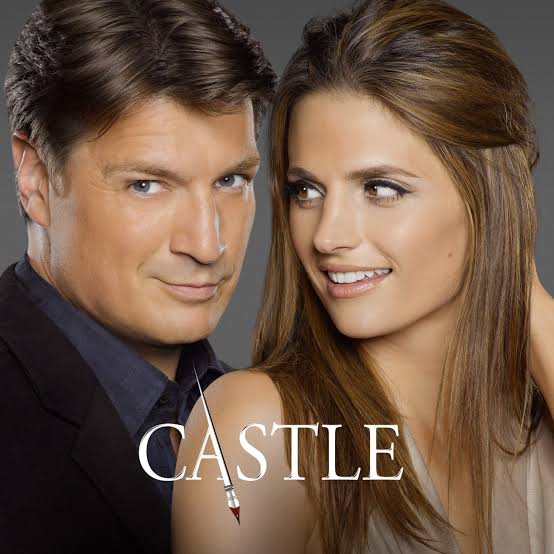
First, let’s talk Castle. This was a TV show that ran for some eight seasons starring Nathan Fillion and Stana Katic (who are both Canadian as it happens). Richard Castle was a mystery novelist, Kate Beckett a New York police detective. They meet when a murderer copies a death from one of Castle’s books. By this time, Castle had tired of Derek Storm, the hero of a string of mystery novels. In Kate Beckett, Castle finds inspiration to create a new character, Nikki Heat, who will be the hero of a brand new series. Castle uses his connections to get permission to shadow Beckett. Castle’s out-of-the-box thinking becomes instrumental in solving a number of difficult cases.
Over the years I wrote a number of Castle fan fiction (fanfic) stories. Time passed. Which brings me to my first Castle story in years. There was a story concept that began its life as a Castle story. All well and good. But at the time, I was also writing original short stories for a collection I planned to self-publish. I took the concept for the Castle story and went in a new direction with original characters. It became “The Woman in Red”, which appeared in my collection called The Woman in Red.
Lately, I’ve been curious what would have happened if I’d gone with my original concept and made it a Castle fic. And there you have it. I had to re-watch some early episodes to get a feel for the characters again, and was pleasantly surprised how much I still enjoyed the show.
I hope you choose to have a look at my new story, called “Castle’s Woman in Red” and I hope you enjoy it.
Is it better to write fan fiction or original fiction? What does better even mean in this context?
After having written both, I don’t have an answer. There are advantages and disadvantages to each. One thing’s for sure—you won’t get rich either way.
Let’s start with fan fiction. To some extent writing fan fiction is easier. The world building has been done for you. The major characters are there for you to use. The cost of this is that you have to remain within the original continuity, and this can make plotting more complicated than it would otherwise be. You can’t change existing characters in any major way. Mind you, there’s a way around this. You can label your story AU, indicating that it takes place in an alternative universe. For example, I wrote a fic called Western Castle which takes the characters from the TV show Castle and plops them into the wild west. That was fun.
Writing fan fiction can be a very sociable activity. You end up making online friends with other writers. Your stories reach lots of eyeballs. In my case, many more eyeballs than peruse my original fiction.
When writing original fiction, there are no rules. Well, except for the norms of whichever genre you’re writing in. You can use any setting, any characters, at any point in time—past, present, or future. In my experience, writing your own stories isn’t as social an activity as writing fan fiction. You can always join a writing group, of course, but I haven’t gone that route because for me, writing is and will remain a hobby, not a putative profession. I write sporadically, sometimes with only a paragraph to show for myself after a week. Hmmm. That could be why my last novel took three years to write ….
The reality is, there are many thousands of self-published authors and it’s almost impossible to get noticed. Whether or not that’s okay depends on your motivation for writing in the first place. For me, getting my book up on Amazon is the culmination of that writing project. One hopes for many readers, but, at least in my experience, many readers are people who know you in real life and are kindly supporting you.
To close, I have to say that I enjoy writing both kinds of fiction. Most of my writing these days is original. My last fanfic was a Doctor Who story that I’d been saving up in case Big Finish asked me back. They haven’t—at least, not yet—so I wrote it anyway and the good folks at The Doctor Who Project posted it for me.
Much to my surprise, I currently find myself taking a break from my next novel and writing one more Castle fanfic, just when I was sure I’d written my last one. I’m enjoying it immensely. I’ll post about it when it’s done. Until then, happy reading and writing!
Two parts to this quick post. First, from Wednesday February 11th (which was yesterday, I know) through Friday the 13th, the eBook version of my thrilling thriller, A Familiar Voice is free! FREE!! Available at your regional Amazon bookstore.
Second order of business. One of the challenges of being an independent author is providing potential customers with links to your book. The problem is that there are many Amazon stores and it is time and space consuming to provide links to your book in all of them.
To the rescue: there are tools out there that can provide a universal link to Amazon bookstores. Just google something like “universal link for Amazon books.” These links will take the user to your book in their regional Amazon store, be it Amazon.com, Amazon.ca, or whatever. The link I used above was provided by a free service called kdpbook.link. There are others. I’ve only used this service once, so can’t say much about it except that it seems to work.
I’m very happy to have found it. Anything that makes it easier for readers to find your book is more than welcome.
Does anyone else feel like they must have time travelled to get here? I mean, how on earth can it possibly be 2026?? That would mean that I’m going to be … how old? (Counts fingers and toes; gives up and throws hands in the air with exasperation.)
At any rate, the end of the year is for looking back. The start of the year is for looking forward. For me, as a writer, I have a couple of projects on the go. The first is a short story, tentatively called “A Secret Voice” which follows the events of A Familiar Voice, my 2025 novel. Once that is done, I’ll be working on another novel in the Voice series, title TBD. The last novel took me three years to complete, so don’t count on the sequel coming out this year. I’ll be providing updates on my progress along the way.
We’ll see what the year has in store. Hope 2026 proves to be kind to all of you.
If, like me, you’ve read several books about how to write a novel, you’ll know that there are about as many writing processes as there are writers. In this post, I’ll try to tell you about mine. But take it with a grain of salt. After all, I’ve only written one novel. I may need to update this post after my second.
The first thing you should know about me is that, in my working career, I worked in a number of roles centered around software development. Back in the old days, project teams used a software development process called the waterfall method. First, you figured out what the software was supposed to do. This was documented as a set of requirements. Next you designed the software to do what it was supposed to, and your design would be developed in increasingly detailed layers until, at the most detailed layer, it was ready to be implemented in software. When the software was finished, it was tested. Seems reasonable.
The problem is that, in practice, the waterfall method didn’t work very well. It was all too often the case that the requirements needed to change along the way. When they did, any design and implementation affected by the change would need to be re-worked. Change was expensive and led to conflicts between the developer and the customer. Another problem was that, sometimes, when you got down to the nitty gritty of writing the software, you realized that, well, it wasn’t going to work. The design might have to be revisited. Maybe the requirements as well.
It was much better to take an iterative approach: identify some key requirements, come up with a software design “scaffolding,” and design and implement some of the key features. Each iteration focused on some number of features. You continue, refining requirements or adding new ones, doing some design, doing some implementation. Experience showed that it was much more effective to develop software this way. When requirements changed, and they almost always change, the cost was much less than if the waterfall process had been in play.
All well and good. So what does this have to do with novel writing? I’m sure you seen that some writers are “plotters” and some are “pantsers.” The former plot out the story in exacting detail. The latter write by the seat of their pants without a firm idea of where they are going.
My writing process was somewhere in the middle, and bears some resemblance to the iterative software development process. I started with the fact that this book was going to be a thriller. It had to be fast-paced, but not exhausting. In other words, action, break, action, break, as a kind of overarching structure. An architectural scaffolding, if you like.
I like to distinguish plot–what happens–versus what the story is actually about. The theme, in other words. I knew early on that I wanted one of the themes to be about family. Later on, I realized that mothers and daughters was going to be another theme. Another theme, the evolution of friendship, emerged later still. The point is, that even the themes were developed dynamically. In some cases, I knew what I was shooting for from the start, and other themes emerged through the writing. In those cases, I would retcon earlier chapters to support a new theme.
While I knew roughly where I wanted the story to end up, the road taking me there was quite dynamic. For instance, I was goofing around with my son, trading a pair of cool looking sunglasses. When I put them on, I looked in the mirror and said, “Maximum cool!” And then I dared myself to add a character to the book called Max Cool. After a bit of research, I found that Kool was a legit last name, so Max Cool became Max Kool, a construction foreman who instructs Katy on self defence techniques.
I kept a separate notes file, in which I jotted down questions to myself, possible directions in which to take the story, and even who the main villain would turn out to be, and whether a given character was good or evil. Also, there was a preliminary chapter breakdown, with just a sentence describing where I wanted a given chapter to take the story. This was fluid, but it was a kind of structure to get me started.
The story is set in 2021, and in the world of the story COVID never happened. Who wants to live through that again? One of the notes I made to myself was I was writing was to incorporate news stories from that time. The thought was that this would more firmly place the story in 2021. But virtually every headline that year was related to COVID, so you won’t see current events colouring the text.
At some point, maybe when the book was about half done, I wrote an outline of the last chapter. It helped reinforce in my mind what had to happen before I got there. It was quite a thing to finally reach that chapter and flesh it out. At around the same time I commissioned Georgia Cook—who I was aware of from her Big Finish Doctor Who stories—to provide a cover illustration. Having this in front of me proved quite inspiring. I didn’t post it online right away, but showed to family and friends, who all reacted the same way: it’s gorgeous!
The novel took me about three years to write. Not because I was writing great literature, but because I often wrote little more than a few sentences per day. Some days I didn’t write at all. I frequently read what had come before, so there was lots of chance to catch typos, plotting errors, and so on. It goes to show you, though, that you can finish a book even if you have little time to spend on it. I’m retired, so in theory there should be lots of time, but I never wanted writing to become a second career. It’s a hobby that I greatly enjoy. I found very quickly that if I forced myself to spend a given amount of time on it, that it wasn’t fun anymore. So, slow and steady it went until it was all done.
As I write, it’s all done except for the busy work. I hired an editor for my first short story collection, but realistically, a self-published book doesn’t make a lot of money. Having learned some important lessons from my editor the first time around, I’ve elected to edit my own writing. For better or for worse. And that’s what the last few weeks of the writing process has been: iterations of reviewing, revising, and repeating until I don’t find anything more I want to change. The last stage will be to work through Amazon’s KDP process to get the book up at their store.
If you’re working on a novel, I hope this helps in some small way and I wish you all the luck and success in the world.
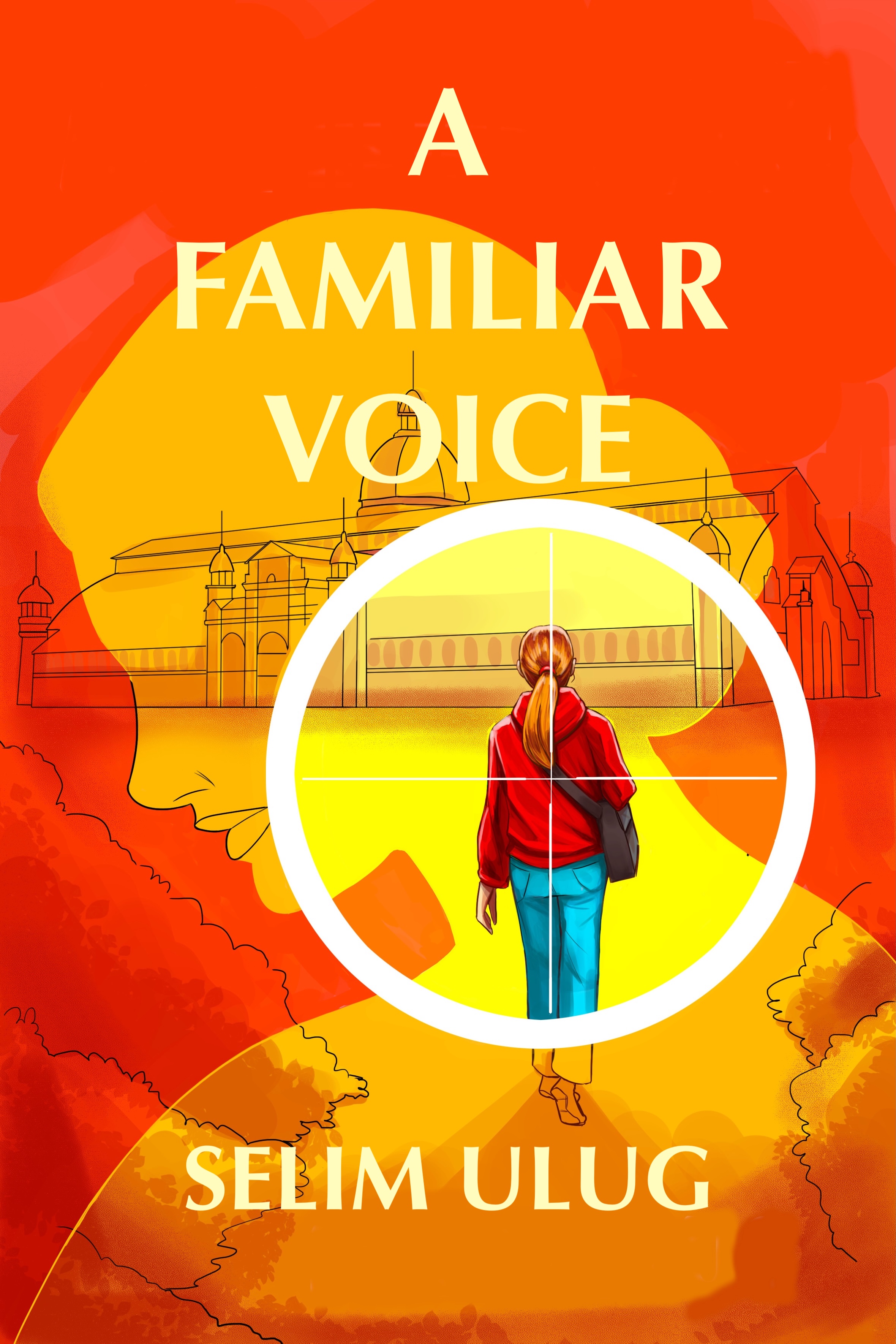
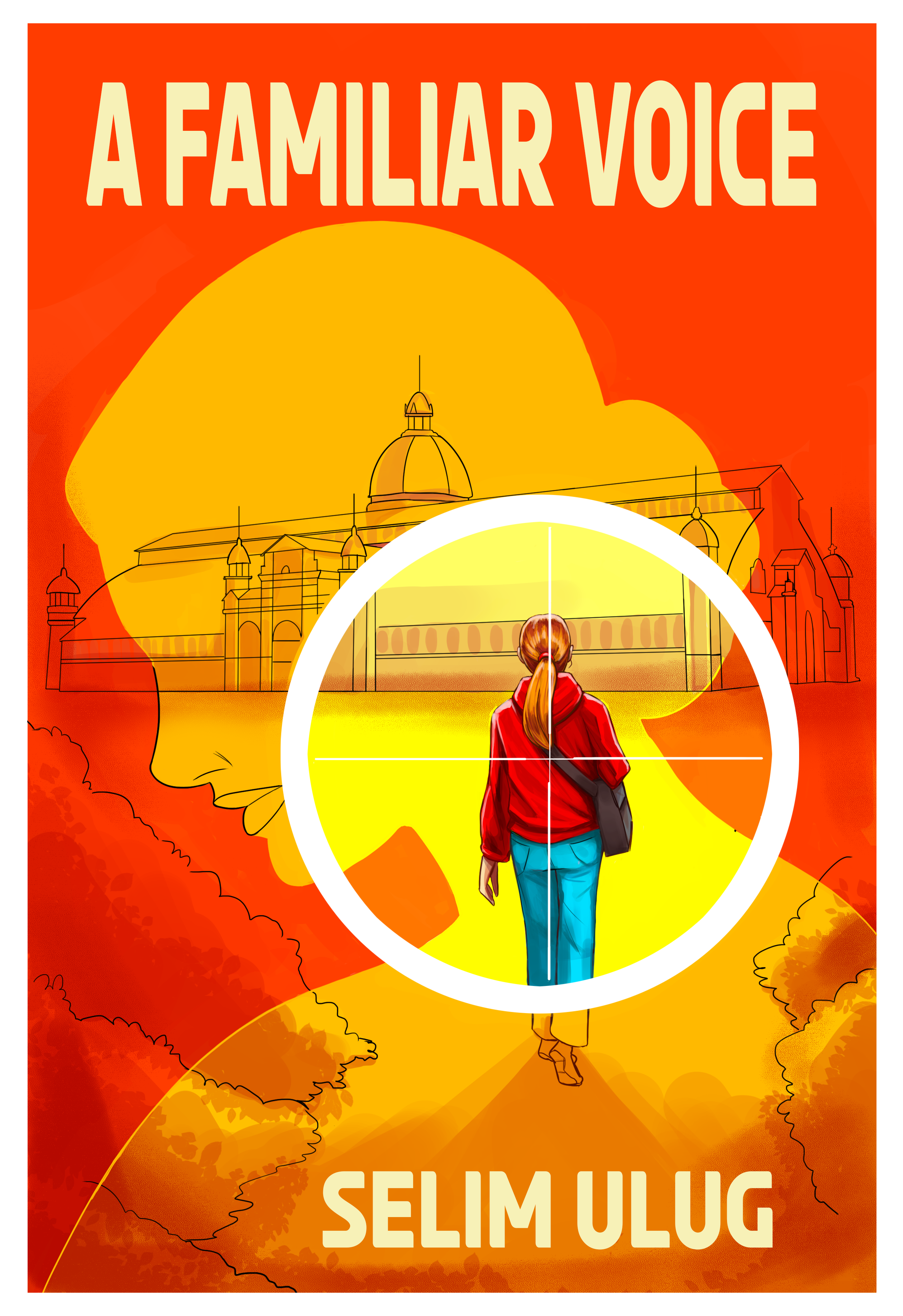
I’ve mentioned in other posts that I’m working on a novel called A Familiar Voice. I can finally announce that it will be available in November. Here’s the beautiful cover art by the omni-talented Georgia Cook.
A Familiar Voice is a sequel to the novelette “A Voice” which appeared in my short story collection, Something Special. The book includes a slightly revised version of that story as well as the novel.
What’s it about, you ask?
When the men responsible for trying to frame—and kill—Katy LaPointe were arrested, she breathed a sigh of relief and thought that her troubles were over. For a time, they were. But a failed drive-by shooting makes Katy realize that her troubles are just beginning. Meanwhile, Laura Seeback, a high school teacher, needs help, even if she doesn’t know it. A familiar voice tells Katy that she can help herself by helping Laura. As the attempts on their lives become more desperate, can Katy and Laura stay alive—and out of jail—long enough to find out who wants them dead?
In other words, A Familiar Voice is a thriller. This is my first novel, after having written many short stories. In a future post, I’ll talk about the experience and process of novel writing.
Doctor Who: The Alternative War is a two-part fan audio series from TT Productions 23. The “alternative” universe branches off from the TV Doctor Who universe at the moment of the Eighth Doctor’s regeneration. In the alternative universe, the Doctor regenerates into a female incarnation who is still very much the Doctor, but who must find a way to bring the Time War to an end. She is the ninth Doctor of this universe.
The first part, simply called “Doctor Who: The Alternative War”, was my first stab at a full-cast script. I won’t deny that I was in a bit over my head. Partly because I took on too much. I brought the cast together but didn’t have the means for them to record it live, so each actor performed in isolation, with the exception of Alia and Abi, who recorded together. I stitched the recordings together as best I could. Fortunately, Jaspreet Singh came to my rescue and tweaked the dialog and added sound effects and music. I enjoyed the result, but came away thinking that I could have done better. I could have written a better script.
And I did do better with the sequel, “Doctor Who: The Alternative War—Reprieve.” The recording used the normal TT Productions 23 process and was much better for it. There was a table-read to iron out the kinks, and then the recording proper with all the actors present. And boy, did the actors nail it. Abi brought us a more seasoned Aliana. Jack played two roles, the 10th and 11th Doctors. He nailed each of them and switched between them like a slippery chameleon. You’d have sworn there were two different actors present. I’ve always been fond of Jaz’s performances as the Third Doctor, and he tackled the role once again with gusto and vim. Marcus gave us a War Master who delighted in getting under the Doctor’s skin. But it was the Master’s sparring with Aliana that was a highlight for me. And then there’s Chelsea and Sam who played the constantly bickering Time Lords Strange and Love. I could listen to those two go at it all day. You would never think that the two actors had never met before the recording. The striking cover art is, as usual by @johannesviii.bsky.social.
As for the script, I was very happy with the result. It was a bit of a large cast for the length of the story, with three Doctors, a companion, the Master, and Strange and Love. I wanted each character to have a purpose—to have agency. And so, the third Doctor has his own little adventure and gets to drive a fast car and reverse the polarity. Aliana, having grown since the first adventure, is often the adult in the room. The eleventh Doctor has a bad day, getting eaten by a lake serpent and then having his sonic screwdriver melted. The tenth Doctor, still recovering from his regeneration, has to keep his ragtag team focussed on the job at hand. And if you’re fond of ’50’s era sci-fi movies, there’s something here for you, too.
When I think of 2019, I think of it as The Before Times. Before the world was frozen in time while researchers scrambled for a vaccine to beat back the beast known as COVID. Some pretty good things happened that year, including my first visit to a Doctor Who convention. I had the pleasure of attending Chicago TARDIS and enjoyed an all-too-brief encounter with Katy Manning.
Katy, of course, was Jo Grant, assistant to the third Doctor, played with panache by Jon Pertwee. Katy left the show after her character married environmentalist Clifford Jones. She has since played Jo Grant and Jo Jones many times for Big Finish.
She was a delight on the show and an even bigger delight in person, doling out hugs to all the fans who lined up for autographs. As we chatted, I might have let slip that I’d written a couple of stories for Big Finish. After all, “Battle Scars”, my second Short Trip for Big Finish, was released just a few months earlier. She narrated Short Trips sometimes, she said, and suggested I write one for her.
A story idea came to me almost immediately. I let it percolate until late last year when I decided to go ahead and write it as fan fiction. As I do these days when I get the urge to write Doctor Who. If there was any chance that Katy would narrate the story, I would have centred it around Jo Jones and Kate Stewart. However, since the story was going to be fan fiction, I decided that it would feature Jo Grant and the Brigadier, and as the story progressed they would bond with each other and gain a measure of mutual respect. The result is a short story called “Panic in the Cave.” It’s hosted by the Doctor Who Project.
Something is stirring in the cave system beneath Yorkshire. Locals are near deafened by eruptions of bone-rattling sound, and tremors have been reported, sufficient to split the earth and swallow vehicles. Before he can be notified, the Doctor takes his TARDIS for its first test flight since the Omega affair. Jo Grant, eager to prove her worth to the Brigadier, insists upon her involvement in the investigation. But, without the Doctor’s support, will she be able to face her fears and confront the unknown?
The Doctor Who Project hosts edited fan fiction stories which are set in alternative timeline. They also host “Brief Encounters” which are short stories set in the “classic” Doctor Who timeline. The editors had some good suggestions for improving my story. Do check the site out.
And please have a look at “Panic in the Cave” and let me know what you think of it.
I knew a guy who, before purchasing a book, read the last couple of pages. Why would you do that? I asked him. Wouldn’t that spoil the whole thing? Because, he said, why would I read a book if I don’t like the ending?
Fast forward to the present, where I’ve been listening to January LaVoy’s narration of Una McCormack’s Star Trek Picard: Second Self. I started at the beginning, but even before reaching the end, I knew that I could recommend this book without hesitation. Doubly true now that I’ve listened to the whole thing.
To be honest, I don’t often enjoy spin-off novels. There are exceptions, most notably Timothy Zahn’s Thrawn trilogy. And there are others I’ve enjoyed, including some Star Trek and Doctor Who novels, but Second Self is something special. Why is that?
Well, for one thing, it’s clearly a book for adults, or at least for the older YA crowd, with its mature themes of war-time atrocities and drug addiction. This book has other things going for it. Motivations are clear. There is a lot of inner dialog which expands our appreciation of Raffi’s (Raffaela Musikerz) character. Backstory, of which Star Trek has untold volumes, is provided as required without overwhelming the current story.
Second Self concerns Raffi, who, at the behest of Admiral Jean-Luc Picard, undertakes an off-books mission to bring a war criminal to justice. The problem is, intelligence reports have the criminal last seen on Ordeve, a planet with which Raffi has unhappy associations. The focus of the book later shifts to Raffi’s earlier time on Ordeve, and then to events that occurred before that. It’s a good story-telling technique, motivating us to understand what went before.
Aside from the very effective prose, there’s January LaVoy’s exquisite narration, with so many voices that you’d almost swear that this was a full-cast audio. I’ll be looking for more audio books narrated by this voice actor.
To be honest, I picked up this audio book because it was on sale. Now that I’ve listened to it, I would happily pay full price. Pick up a copy or listen to the audio version. If you enjoy Star Trek, you’ll be glad you read Second Self.