Category Archives: Culture

Two Unputdownable Books

I don’t know about you, but as time goes by it’s increasingly seldom that I find books that are genuinely hard to put down. In fact, it seems more and more common for me to discard a book if it hasn’t grabbed me by at least page one hundred. So imagine my glee when I find myself reading two books that are unputdownable. Don’t judge me. The fact is, I usually “read” two books at a time. The reason read is in quotes is that one of the books will be either a physical book or an eBook, and the other an audio book. When I sit down to read, I’ll generally pick up the print book. When I’m walking, cleaning, or whatever, I’ll often listen to the audio book. The psychologist in me finds it fascinating that I never get confused about what happened or who appears in which book. Perhaps it’s the fact that the input modalities are different. But I digress.

The first of the two books that I’m particularly enjoying at the moment is Labyrinth of the Spirits by Carlos Ruiz Zafron, the fourth and final book in the Cemetery of Forgotten Books series. It has been a long, long time since I’ve encountered an author whose prose has this level of beauty, whose characters are so well developed, and whose stories so relentlessly draw you in. The books are part literary novel and part mystery with, possibly, a touch of fantasy. It depends on how you interpret them. For me, the first and fourth books are the strongest, both equally compelling. I’ve recently finished my third reading of the first, The Shadow of the Wind, and I’m on my second reading of the fourth. This time around, I’ve read the books in order. The second and third books, The Angels Game and The Prisoner of Heaven, are weaker in my opinion, especially Prisoner, though that book, at the very least, sets things up for the fourth. Angels is very good, but confusing, as I wasn’t sure at times whether the story was unfolding as written or whether the protagonist was simply caught up in a story of his own creation.

The second book I’m loving right now is The Evolutionary Void, the third in the Void trilogy by Peter F. Hamilton. Here’s the thing: when you read a trilogy by Hamilton, you need to realize that the story is going to be big. Really big. And there are many, many characters and locales, and many subplots that will, miraculously it seems, come together at the end. The Void books represent the second trilogy of Hamilton’s that I’ve read. In both cases, I wondered as I read the first book whether the author wasn’t just pot boiling for the sake of producing a thick book. In both cases, I was dead wrong. The first book, as it should, introduces characters and situations and conflicts and get things going. Things start looking pretty bleak in the second book, and in the third, well, I’m not finished Evolutionary yet but I have hopes for a satisfying conclusion.

I hope that’s enough to entice you to check out these books. I’d make this a longer post, but I really need to get back to my reading …

A Familiar Voice is Out in the World!

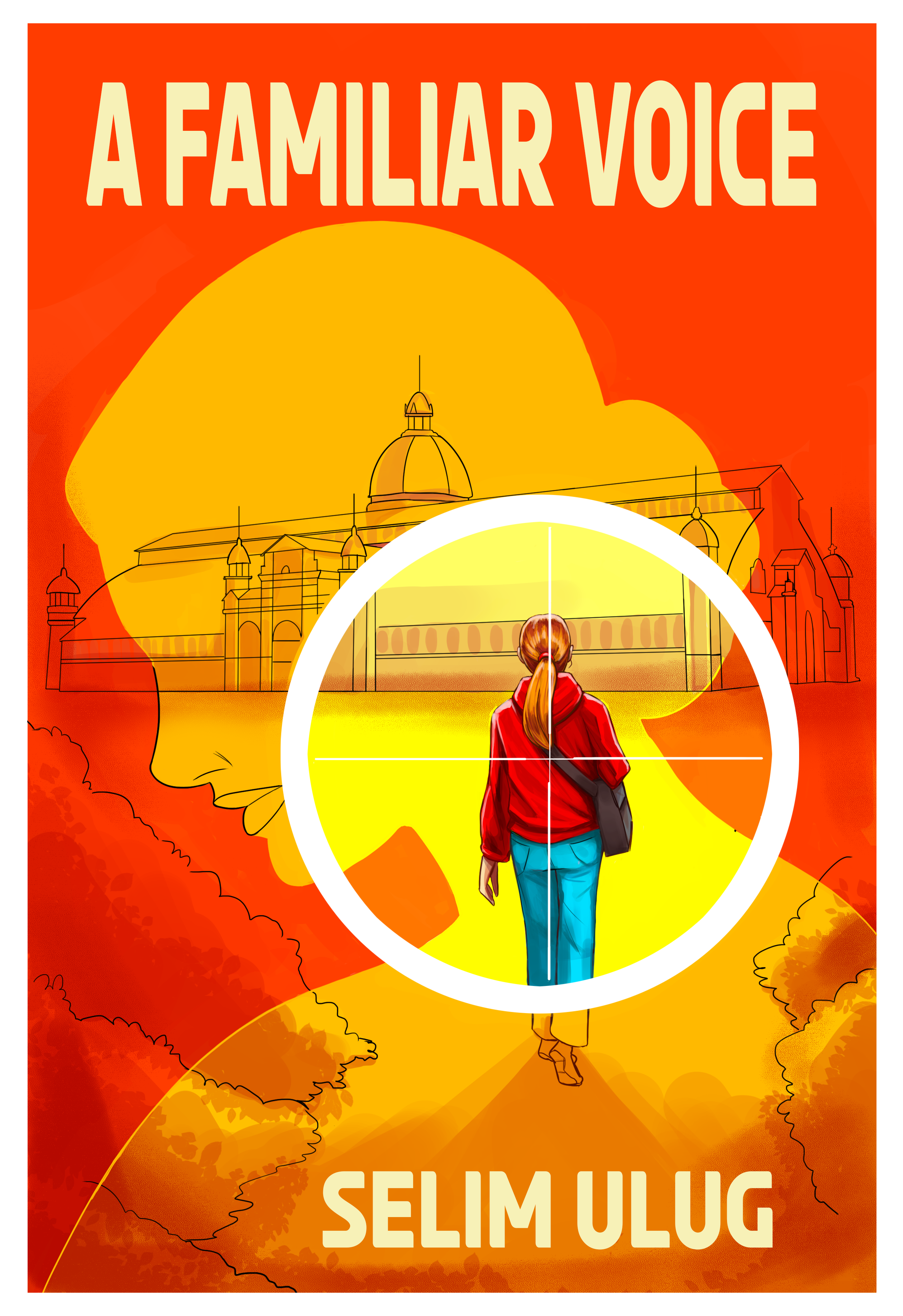
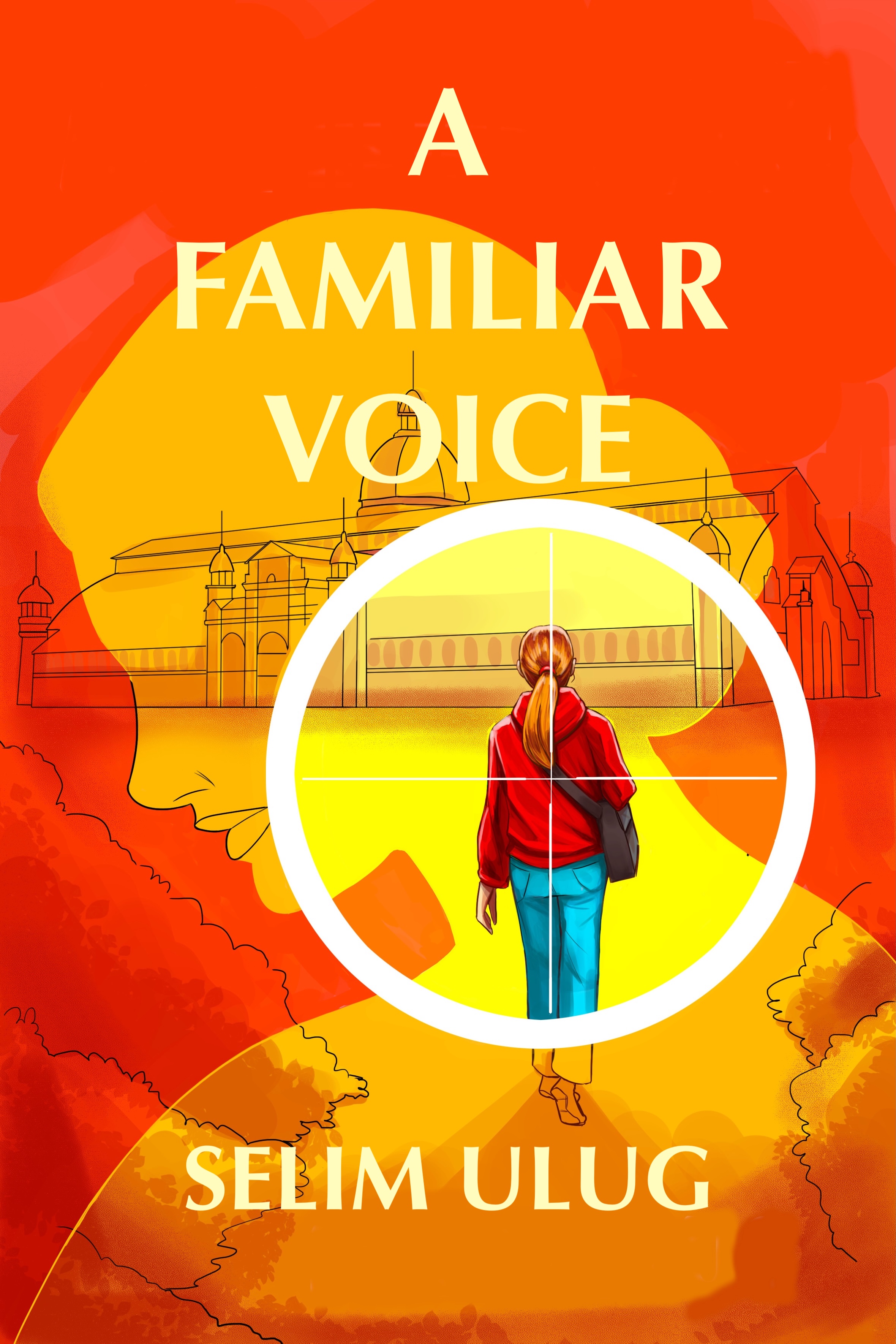
My new novel, a thriller called A Familiar Voice, is now available at your regional Amazon bookstore in eBook and paperback formats. If you should pick up a copy, I hope you enjoy it.

Amazon.ca

Amazon.com

Amazon.co.uk

Amazon.de

A Preview of A Familiar Voice

A Familiar Voice comes out in a few days, on the 18th of November. In the meantime, here’s a quick sample of what’s in store for Katy Lapointe.


After lunch, they put their clothes in the washing machine. Katy had just started the coffee maker when the doorbell rang.

“Katy Lapointe?” the woman said. She was wearing a dark business suit with her black hair pulled tightly into a bun. A leather satchel hung from her shoulder.

“Yes,” Katy said warily.

“Detective Jana Murty,” she said, flashing some identification. “May I come in?”

Katy, resigned to another grilling, opened the door further, stepped aside, and beckoned to the living room where her mother was already seated upon the sofa. Katy joined her, and the detective took a seat opposite.

“Mrs. Girard?” said the detective. Katy’s mother nodded.

“Are you here to blame us for getting shot at?” said Katy.

“Katy!” admonished her mother.

“It’s quite all right Mrs. Girard. No, that’s not why I’m here, though I’m curious why you would think that.”

“Sorry. The detective yesterday seemed to think we were as guilty as the guys that shot at us.”

“Well, allow me to apologize on their behalf,” said Detective Murty. “I’m afraid, though, that I will need you to run through what happened once more.”

With a sigh, Katy said, “Sure,” and she did so.

When she finished, the coffeemaker pinged. Katy’s mother looked towards the detective and asked, “Who would like some coffee?”

“That would be lovely, thanks,” said Murty. “With some cream, please, if you have it.”

“And I don’t have to ask you, Katy,” she said as she rose and went to the kitchen.

In a hushed voice, Detective Murty leaned forward and said to Katy, “If possible, I’d like to discuss something with you. Just you. It might be upsetting to your mother.”

This aroused Katy’s curiosity, and she nodded in response.

When her mother returned with a tray of coffees and cream for her and the detective, Katy said, “Thanks, Maman. I can take care of the rest of the detective’s questions if you wanted to get back to your housework.”

She glanced towards the detective. Upon Murty nodding in agreement, she said, “Merci,” left the living room, and took the stairs to the second floor to resume her vacuuming.

“How much does your mother know about your troubles of earlier this year?”

“Troubles,” said Katy. “That’s one way of putting it. All she knows is that I was attacked in a parking lot. There was no keeping that from her once the video went viral. She doesn’t know anything else. She would freak right out.”

“I thought as much,” said Murty. “I wouldn’t have told my mother either. In fact, there are a lot of things that happen in this job that I can’t share with her. That’s why I need to speak to you alone.”

Dipping into her shoulder bag, Murty retrieved a file folder, set it on the coffee table, and opened it, flipping through the pages of text and photographs.

“You were identified as a person of interest in an industrial espionage case. And then as a person of interest in the murders of Marvin Benett and Jim Coban. You were released, and then you goaded Robert Johnson into sending the real killer after you. He attacked you and that attack was, coincidentally you claim, caught on video. Is that an accurate summary?”

“I suppose. You missed the part where I was nearly killed in my own home. And it was all a bit more upsetting than your summary might imply. I mean, Marv was one of my best friends.”

“Of course. You must be an amazingly strong person to come through an experience like that and still be as well-adjusted as you seem to be.”

Katy couldn’t help but smile. “Heavy drinking helps.”

“I suspect it’s a bit more than that.” Here, Murty paused and seemed to assess Katy. When she continued, she said, “I’m very sorry to tell you that what happened yesterday might be related to that case.”

Katy felt a surge of dread. “How? We took down all the players. I figured yesterday was road rage or some such thing.”

“And they just happened to have ski masks in the car this time of year? But it’s not just that. Last week, Bernard Ladouceur was killed in a prison fight. And this morning, Robert Johnson was found dead in his cell.”

Katy felt herself turning pale. Ladouceur had been the hands-on muscle. He’d killed Marv. He’d also killed Hitesh Varma, the marketing director at Davidson, and Jim Coban, the marketing director at her company. And he had tried to kill her. Twice. As for Johnson, Katy and he were former colleagues and friends. Unfortunately, he had been responsible for the whole nasty business. Taking him down had been bittersweet. “How did it happen?”

“He was found with a shiv sticking out of his jugular.”

“Well, that would do it.” Katy, thinking furiously, considering the implications. There was really only one conclusion, and she hated it: “Someone is tidying up loose ends.”

“Exactly,” Murty nodded. “Now, it’s still possible that these are coincidences, but if you put them together with what happened yesterday—”

“Then,” said Katy, finishing the sentence, “I’m another loose end.”

“And if that’s true, your mother’s not safe, not if you stay here.” While Katy digested that, Murty continued. “We can arrange protective custody, but at the very least I think you need to get out of this house.”

“Agreed,” said Katy, getting to her feet. “But ixnay on the protective custody. I can take care of myself.”

The detective smiled. “I thought you might say that, but the offer stands.” After handing Katy her business card, she added “My cell phone number is there. Call anytime. I mean it. And please take a card for your mother, just in case.”

“I do appreciate it, really I do,” said Katy, taking the cards. “Will you let me know if you find out anything?”

“For sure. But please exercise extreme caution. There’s no way of knowing when your friends from yesterday will be back, but you can be sure they’ll be back sometime.”
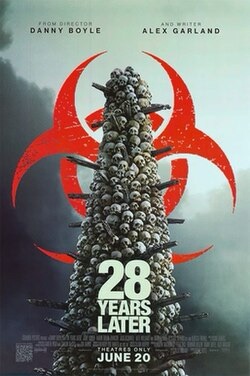
28 Years Later

This article contains mild spoilers for 28 Years Later.

Sometimes, you need to check your expectations at the door before taking your seat in the theatre. I think that’s the case with the latest Danny Boyle and Alex Garland collaboration, 28 Years Later. This, the third in the franchise, is a different kind of zombie movie. Although there are definitely zombies, and there’s a lot of bloodletting, this is really a coming of age story. At the same time, you get to see what’s currently going on in rage virus-infected Britain.

Since 28 Weeks Later, the virus has mutated. We still have the zombies we saw in the previous movies, but there are now a couple of other types. One, which seems a poor adaptation, produces human walruses that slowly slither upon the ground, eating worms or whatever else they can happen to catch, including napping humans. The more dangerous types are called “alphas.” These are larger than the typical human, and tougher; they can withstand all sorts of punishment, though a bullet or arrow to the head is still fatal. They are also more intelligent, almost human-like in how they behave and how they are organized. We see, for example, a pregnant alpha. They don’t just eat uninfected humans, they feast upon animals such as deer.

Britain remains the only infected country, and its quarantine is enforced by warships visible from the coast. Although we saw the virus spread to France in the last film, we are told that the Europeans beat the virus back. Some take this as a repudiation of 28 Weeks Later, though it makes sense that, with the emergence of the rage virus in Britain, other countries would develop contingency plans just in case. I do wish we found out what became of the two children, but you can’t have everything.

The central character of 28 Years Later is twelve-year-old Spike. His community is nestled safely behind large gates on Holy Island in Northumberland, linked to the mainland by a causeway that is only traversable at low tide. His father has declared Spike ready for his passage to adulthood, which entails traveling to the mainland and killing his first zombies. They make it there and back again—just. Something Spike learns afterwards sends him back to the mainland in search of help for his mother.

There’s not a lot of story here, but there’s plenty of scares and a lot of growing up. The young Alfie Williams, who plays Spike, is a real find. Not only is he an amazing child-actor, he’s a remarkable actor, period, and he’s a stand-out in a cast that gives some very strong performances.

The film, unfortunately, doesn’t so much end as it stops. However, it does set up the sequel, to be released in 2026, called 28 Years Later: The Bone Temple.

I very much enjoyed 28 Years Later and I’ll be looking forward to the next one.

On Writing a Novel

If, like me, you’ve read several books about how to write a novel, you’ll know that there are about as many writing processes as there are writers. In this post, I’ll try to tell you about mine. But take it with a grain of salt. After all, I’ve only written one novel. I may need to update this post after my second.

The first thing you should know about me is that, in my working career, I worked in a number of roles centered around software development. Back in the old days, project teams used a software development process called the waterfall method. First, you figured out what the software was supposed to do. This was documented as a set of requirements. Next you designed the software to do what it was supposed to, and your design would be developed in increasingly detailed layers until, at the most detailed layer, it was ready to be implemented in software. When the software was finished, it was tested. Seems reasonable.

The problem is that, in practice, the waterfall method didn’t work very well. It was all too often the case that the requirements needed to change along the way. When they did, any design and implementation affected by the change would need to be re-worked. Change was expensive and led to conflicts between the developer and the customer. Another problem was that, sometimes, when you got down to the nitty gritty of writing the software, you realized that, well, it wasn’t going to work. The design might have to be revisited. Maybe the requirements as well.

It was much better to take an iterative approach: identify some key requirements, come up with a software design “scaffolding,” and design and implement some of the key features. Each iteration focused on some number of features. You continue, refining requirements or adding new ones, doing some design, doing some implementation. Experience showed that it was much more effective to develop software this way. When requirements changed, and they almost always change, the cost was much less than if the waterfall process had been in play.

All well and good. So what does this have to do with novel writing? I’m sure you seen that some writers are “plotters” and some are “pantsers.” The former plot out the story in exacting detail. The latter write by the seat of their pants without a firm idea of where they are going.

My writing process was somewhere in the middle, and bears some resemblance to the iterative software development process. I started with the fact that this book was going to be a thriller. It had to be fast-paced, but not exhausting. In other words, action, break, action, break, as a kind of overarching structure. An architectural scaffolding, if you like.

I like to distinguish plot–what happens–versus what the story is actually about. The theme, in other words. I knew early on that I wanted one of the themes to be about family. Later on, I realized that mothers and daughters was going to be another theme. Another theme, the evolution of friendship, emerged later still. The point is, that even the themes were developed dynamically. In some cases, I knew what I was shooting for from the start, and other themes emerged through the writing. In those cases, I would retcon earlier chapters to support a new theme.

While I knew roughly where I wanted the story to end up, the road taking me there was quite dynamic. For instance, I was goofing around with my son, trading a pair of cool looking sunglasses. When I put them on, I looked in the mirror and said, “Maximum cool!” And then I dared myself to add a character to the book called Max Cool. After a bit of research, I found that Kool was a legit last name, so Max Cool became Max Kool, a construction foreman who instructs Katy on self defence techniques.

I kept a separate notes file, in which I jotted down questions to myself, possible directions in which to take the story, and even who the main villain would turn out to be, and whether a given character was good or evil. Also, there was a preliminary chapter breakdown, with just a sentence describing where I wanted a given chapter to take the story. This was fluid, but it was a kind of structure to get me started.

The story is set in 2021, and in the world of the story COVID never happened. Who wants to live through that again? One of the notes I made to myself was I was writing was to incorporate news stories from that time. The thought was that this would more firmly place the story in 2021. But virtually every headline that year was related to COVID, so you won’t see current events colouring the text.

At some point, maybe when the book was about half done, I wrote an outline of the last chapter. It helped reinforce in my mind what had to happen before I got there. It was quite a thing to finally reach that chapter and flesh it out. At around the same time I commissioned Georgia Cook—who I was aware of from her Big Finish Doctor Who stories—to provide a cover illustration. Having this in front of me proved quite inspiring. I didn’t post it online right away, but showed to family and friends, who all reacted the same way: it’s gorgeous!

The novel took me about three years to write. Not because I was writing great literature, but because I often wrote little more than a few sentences per day. Some days I didn’t write at all. I frequently read what had come before, so there was lots of chance to catch typos, plotting errors, and so on. It goes to show you, though, that you can finish a book even if you have little time to spend on it. I’m retired, so in theory there should be lots of time, but I never wanted writing to become a second career. It’s a hobby that I greatly enjoy. I found very quickly that if I forced myself to spend a given amount of time on it, that it wasn’t fun anymore. So, slow and steady it went until it was all done.

As I write, it’s all done except for the busy work. I hired an editor for my first short story collection, but realistically, a self-published book doesn’t make a lot of money. Having learned some important lessons from my editor the first time around, I’ve elected to edit my own writing. For better or for worse. And that’s what the last few weeks of the writing process has been: iterations of reviewing, revising, and repeating until I don’t find anything more I want to change. The last stage will be to work through Amazon’s KDP process to get the book up at their store.

If you’re working on a novel, I hope this helps in some small way and I wish you all the luck and success in the world.

A Familiar Voice

I’ve mentioned in other posts that I’m working on a novel called A Familiar Voice. I can finally announce that it will be available in November. Here’s the beautiful cover art by the omni-talented Georgia Cook.

A Familiar Voice is a sequel to the novelette “A Voice” which appeared in my short story collection, Something Special. The book includes a slightly revised version of that story as well as the novel.

What’s it about, you ask?

When the men responsible for trying to frame—and kill—Katy LaPointe were arrested, she breathed a sigh of relief and thought that her troubles were over. For a time, they were. But a failed drive-by shooting makes Katy realize that her troubles are just beginning.
Meanwhile, Laura Seeback, a high school teacher, needs help, even if she doesn’t know it. A familiar voice tells Katy that she can help herself by helping Laura. As the attempts on their lives become more desperate, can Katy and Laura stay alive—and out of jail—long enough to find out who wants them dead?

In other words, A Familiar Voice is a thriller. This is my first novel, after having written many short stories. In a future post, I’ll talk about the experience and process of novel writing.

Star Trek: Strange New Worlds: Asylum

Star Trek: Strange New Worlds: Asylum, by Una McCormack, is the third Star Trek audio book I’ve listened to this year. It is very much a character-based story, and features Una Chin-Riley in two time periods: on the “present day” Enterprise with Christopher Pike in command, and 25 years earlier, when Chin-Riley was a senior cadet at Starfleet Academy.

As an aside, I’m glad they gave Number One a name—really, they had to, didn’t they?—and I think they picked a perfect name, but after decades of knowing her as Number One, referring to her as Una is, well, a process.

Back at Starfleet Academy, Ensign Christopher Pike, who is on leave pending an investigation of an incident in which he was involved, is giving some lectures on what life is really like “out there.” Pelia, who is one of Chin-Riley’s instructors, encourages her to sit in on Pike’s lectures. She does so, and after a rocky start, they become fast friends.

Meanwhile, Chin-Riley’s roommate is involved with Federation asylum seekers, specifically, a family of Euxhana, a cultural and ethnic minority on Chionia. When Chin-Riley learns about them, she becomes interested and gets involved as well. In the present day, the Enterprise is hosting trade negotiations between the Federation and the Chionian government. And here is where the underlying theme of this book comes in. For the treatment of the Euxhana reflects the treatment of Indigenous peoples in North America, with the Chionians removing the Euxhana from their traditional territories, and attempting to erase their culture and language. The difference is that the treatment of our Indigenous peoples was much worse.

It is worth pointing out that, since the beginning, Star Trek has been a vehicle for exploring social issues of the day. At the time, they got away with it because it was set in space in the future, not Earth in the 20th Century. So, there were episodes dealing with racism, mutual assured destruction, the impact of artificial intelligence, and others. In fact, every time Uhuru appeared onscreen in the 1960’s, a Black woman on the bridge of a starship, that was social commentary. It’s also worth pointing out that “Asylum” isn’t the first Star Trek story to deal with the treatment of Indigenous peoples. This was also explored in the Next Generation episode, “Journey’s End.” To sum up, if you prefer your Star Trek to be free of social commentary, this isn’t the story for you. But if, like me, you feel that social commentary is at the heart of Star Trek, you’ll be well rewarded.

In the present day, Chin-Riley tries very hard to put right a bad choice she made in the academy with regard to the Euxhana refugees. This is the tension at the heart of the story and contributes to the immense readability of this well-written book.

Meanwhile, the audio version of Asylum is ably narrated by Robert Petkoff. Among his many voices, he captures the cool-under-fire persona of Christopher Pike particularly well. Also, believe it or not, he does an amazing Pelia. Overall, his narration is excellent and highly recommended, as is the book as a whole.

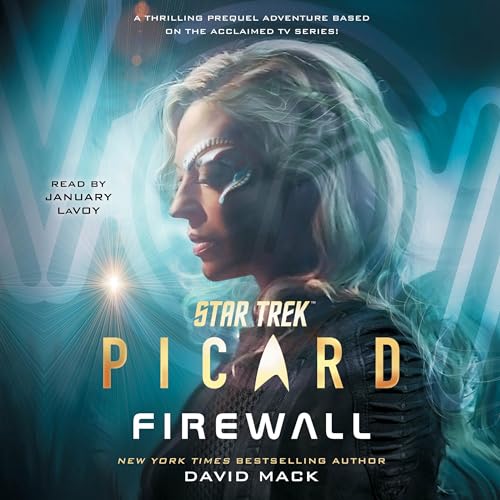
Star Trek Picard: Firewall

A woman walks into a bar and inquires of the Fenris Ranger therein how she herself might join the rangers.

This is how David Mack’s Star Trek Picard: Firewall opens. The novel bears some comparison to Una McCormack’s Star Trek Picard: Second Self, which I wrote about previously. Like Second Self, the audio version of Firewall is narrated by January LaVoy, the extraordinary narrator of a thousand voices. Her Kathryn Janeway is so authentic you’d be forgiven for thinking they’d brought in Kate Mulgrew to speak the part. Not only can she pull off many voices, but LaVoy is an amazing actor who delivers a full gamut of emotions.

Star Trek Picard: Firewall

As I’ve mentioned before, I’m not generally a fan of spin-off novels. But, like Second Self, Firewall very pleasantly surprised me. It’s reads like it’s written for adults with some very mature themes, including genocide and food as a weapon. Both remain depressingly apropos to the times in which we live.

Whereas Second Self is concerned with Raffi (Raffaela Musiker), Firewall explores the history of the other side of the coin, Seven of Nine, and takes us from Voyager’s return up to the events of Star Trek Picard. Seven of Nine’s growth is a joy to behold. Early on, we see her at her lowest: rejected from Star Fleet Academy because of her history with the Borg; lost; working at menial jobs; seeking human contact in whatever form she can. Things change when she becomes involved with a Fenris Ranger operation. She begins to grow personally, as a tactician, and as a leader. She comes to believe in her own competency.

I appreciate the fact that, for the vast majority of the book, there are few prerequisites. It is helpful to know something about Seven of Nine from her time on Voyager, and her relationship with Captain Janeway. Still, there’s a reveal in the book and I could tell it was meant to be a big deal. Sadly, it went right over my head. My reaction was, Huh? I’m a fan, you see, but not a “super” fan. Not of Star Trek or any other fandom, to be honest. Thankfully, we have the Memory Alpha wiki and that set that to rights.

The bottom line is that I highly recommend Star Trek Picard: Firewall. The prose is a pleasure to read, and the story is very exciting and very touching. And it’s Star Trek. What more could you ask for?

Revisiting The Alternative War

Doctor Who: The Alternative War is a two-part fan audio series from TT Productions 23. The “alternative” universe branches off from the TV Doctor Who universe at the moment of the Eighth Doctor’s regeneration. In the alternative universe, the Doctor regenerates into a female incarnation who is still very much the Doctor, but who must find a way to bring the Time War to an end. She is the ninth Doctor of this universe.

The first part, simply called “Doctor Who: The Alternative War”, was my first stab at a full-cast script. I won’t deny that I was in a bit over my head. Partly because I took on too much. I brought the cast together but didn’t have the means for them to record it live, so each actor performed in isolation, with the exception of Alia and Abi, who recorded together. I stitched the recordings together as best I could. Fortunately, Jaspreet Singh came to my rescue and tweaked the dialog and added sound effects and music. I enjoyed the result, but came away thinking that I could have done better. I could have written a better script.

And I did do better with the sequel, “Doctor Who: The Alternative War—Reprieve.” The recording used the normal TT Productions 23 process and was much better for it. There was a table-read to iron out the kinks, and then the recording proper with all the actors present. And boy, did the actors nail it. Abi brought us a more seasoned Aliana. Jack played two roles, the 10th and 11th Doctors. He nailed each of them and switched between them like a slippery chameleon. You’d have sworn there were two different actors present. I’ve always been fond of Jaz’s performances as the Third Doctor, and he tackled the role once again with gusto and vim. Marcus gave us a War Master who delighted in getting under the Doctor’s skin. But it was the Master’s sparring with Aliana that was a highlight for me. And then there’s Chelsea and Sam who played the constantly bickering Time Lords Strange and Love. I could listen to those two go at it all day. You would never think that the two actors had never met before the recording. The striking cover art is, as usual by ‪@johannesviii.bsky.social.

As for the script, I was very happy with the result. It was a bit of a large cast for the length of the story, with three Doctors, a companion, the Master, and Strange and Love. I wanted each character to have a purpose—to have agency. And so, the third Doctor has his own little adventure and gets to drive a fast car and reverse the polarity. Aliana, having grown since the first adventure, is often the adult in the room. The eleventh Doctor has a bad day, getting eaten by a lake serpent and then having his sonic screwdriver melted. The tenth Doctor, still recovering from his regeneration, has to keep his ragtag team focussed on the job at hand. And if you’re fond of ’50’s era sci-fi movies, there’s something here for you, too.

So if you haven’t listened to it yet, give Doctor Who: The Alternative War — Reprieve a try. I think you’ll be glad you did.

Star Trek Picard: Second Self

I knew a guy who, before purchasing a book, read the last couple of pages. Why would you do that? I asked him. Wouldn’t that spoil the whole thing? Because, he said, why would I read a book if I don’t like the ending?

Fast forward to the present, where I’ve been listening to January LaVoy’s narration of Una McCormack’s Star Trek Picard: Second Self. I started at the beginning, but even before reaching the end, I knew that I could recommend this book without hesitation. Doubly true now that I’ve listened to the whole thing.

To be honest, I don’t often enjoy spin-off novels. There are exceptions, most notably Timothy Zahn’s Thrawn trilogy. And there are others I’ve enjoyed, including some Star Trek and Doctor Who novels, but Second Self is something special. Why is that?

Well, for one thing, it’s clearly a book for adults, or at least for the older YA crowd, with its mature themes of war-time atrocities and drug addiction. This book has other things going for it. Motivations are clear. There is a lot of inner dialog which expands our appreciation of Raffi’s (Raffaela Musikerz) character. Backstory, of which Star Trek has untold volumes, is provided as required without overwhelming the current story.

Second Self concerns Raffi, who, at the behest of Admiral Jean-Luc Picard, undertakes an off-books mission to bring a war criminal to justice. The problem is, intelligence reports have the criminal last seen on Ordeve, a planet with which Raffi has unhappy associations. The focus of the book later shifts to Raffi’s earlier time on Ordeve, and then to events that occurred before that. It’s a good story-telling technique, motivating us to understand what went before.

Aside from the very effective prose, there’s January LaVoy’s exquisite narration, with so many voices that you’d almost swear that this was a full-cast audio. I’ll be looking for more audio books narrated by this voice actor.

To be honest, I picked up this audio book because it was on sale. Now that I’ve listened to it, I would happily pay full price. Pick up a copy or listen to the audio version. If you enjoy Star Trek, you’ll be glad you read Second Self.