Category Archives: Culture

Star Wars: The Motivation Problem

This post contains SPOILERS for Star Wars: The Acolyte

If you’ve listened to “Landbound“, the Doctor Who Short Trip I wrote for Big Finish, you’ll know that it begins with the Third Doctor driving off in a temper from Unit HQ until he finds himself at the seaside in Whitby. In my first draft, the Doctor was simply having a bad day and was fed up with the Brigadier and his rules and regulations. Ian Atkins, my editor, suggested making the reason for the Doctor’s anger clearer by setting the opening right after the TV episode, “The Silurians.”

The Silurians, an intelligent, lizard-like race, ruled the world before humans came along. They’ve since been in hibernation. In the episode, they awake and wish to resume their place on the Earth’s surface. The Doctor tries to achieve a peaceful solution only to have his efforts undermined by the Brigadier, who seals them underground and likely kills them all in the process. The Doctor, of course, is furious.

With that change, the reason for the Doctor’s anger in “Landbound” begins becomes much clearer. And clear motivation, I’ve learned, is key to good storytelling.

Which brings us to Star Wars: The Acolyte, the latest Star Wars series from Disney, in which very few character motivations are clear. For instance, the Jedi are shocked — shocked! — that the Witches of Brendok are raising two children. I wonder where they thought big witches came from if not little witches. Are the witches inherently evil? Or just different. Or does different equate to evil? Do witches roam the galaxy, turning people into newts? Why is it so very important to the Jedi to remove these children from the witches? Particularly since these not-so-old children are apparently too old to train.

What motivates Torbin, the Jedi who instigated the awful events on Brendok? Why is he so whiny? Why does he want so badly to return to Coruscant? Why does he wear his heart on his sleeve when the mission of the Jedi seems to be to drum emotion out of their students (more on that in my next post)? Why does he wantonly disregard his master? Is he campaigning for Worst Padawan Ever?

There’s a tracker in the show, a diminutive creature with a great sense of smell. He’s not just a dog on two legs, though. He’s quite handy with technology as it turns out, and effectively caused Sol’s ship to crash-land. What’s his story? How does he communicate with people? Why does he do what he does?

In the final episode, Osha and “the Stranger” leave but apparently they simply must leave Mae behind. Why is that? Is the ship not big enough for three? Is it that a Sith can only have one apprentice at a time? Enquiring minds want to know, and it wouldn’t have taken long to explain.

There are other questions, of course, but I won’t list them all. Except to question Jedi Master Vernestra Rwoh, and her desire to hide what’s going on in Acolyte from the Jedi Council.

There are a lot of screen writers out there and by all accounts it’s nearly impossible to get a treatment to the point of actual production. Studios, it seems, have the luxury of selecting from the best of the best. Given that, I’ll end with a final question: why would Disney accept a script in which reasonably clear motivation is so lacking?

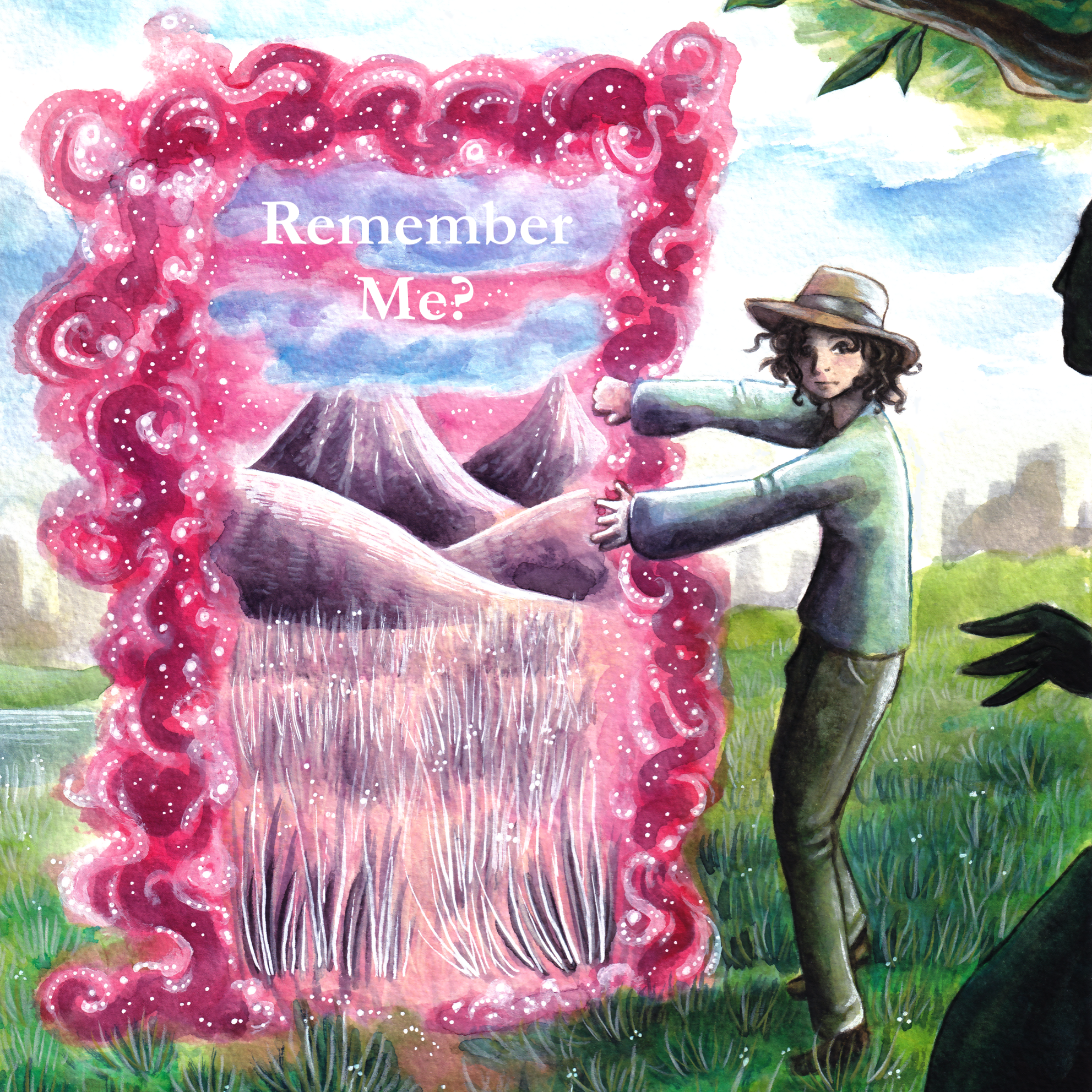
Remember Me?

If you remember my short story collection, Something Special, then you might remember a story therein called “Remember Me?” It was one of my favourites.

The story concerns Will Fallon, a man muddling his way through life, and his encounter with Susan Follows, a woman who claims she can travel between worlds. Susan wants to take Will’s cat away.

Puzzled at his lack of success with relationships, Will isn’t quick to trust. “Remember Me?” is really about him learning to open up to people and to the wonders in our every day lives.

I first envisioned “Remember Me?” as a Doctor Who story from the point of view of a companion who gets left behind. But that was just the begining. I wanted to do more with the story, take it in a different direction.

The Something Special version of the story is set in Kingston, Ontario. When TT Productions 23 agreed to produce an audio version, I moved the setting to London, UK, and Will meets Susan in Kensington Park near the statue of Peter Pan, a location that I adore.

The audio version is otherwise nearly identical to the original, with the exception of an opening scene that I added to set the stage for what was to come.

Abi Louise, TT Producer and jack-of-all-trades extraordinaire, assembled a small but stellar cast, including Connor Sumner, Vanessa McAuley, and Ellaika Villegas. They nailed their lines on the first take. As is often the case, the actors breathed new life into the story, in ways that I found surprisingly touching. I mean, considering that I wrote the thing.

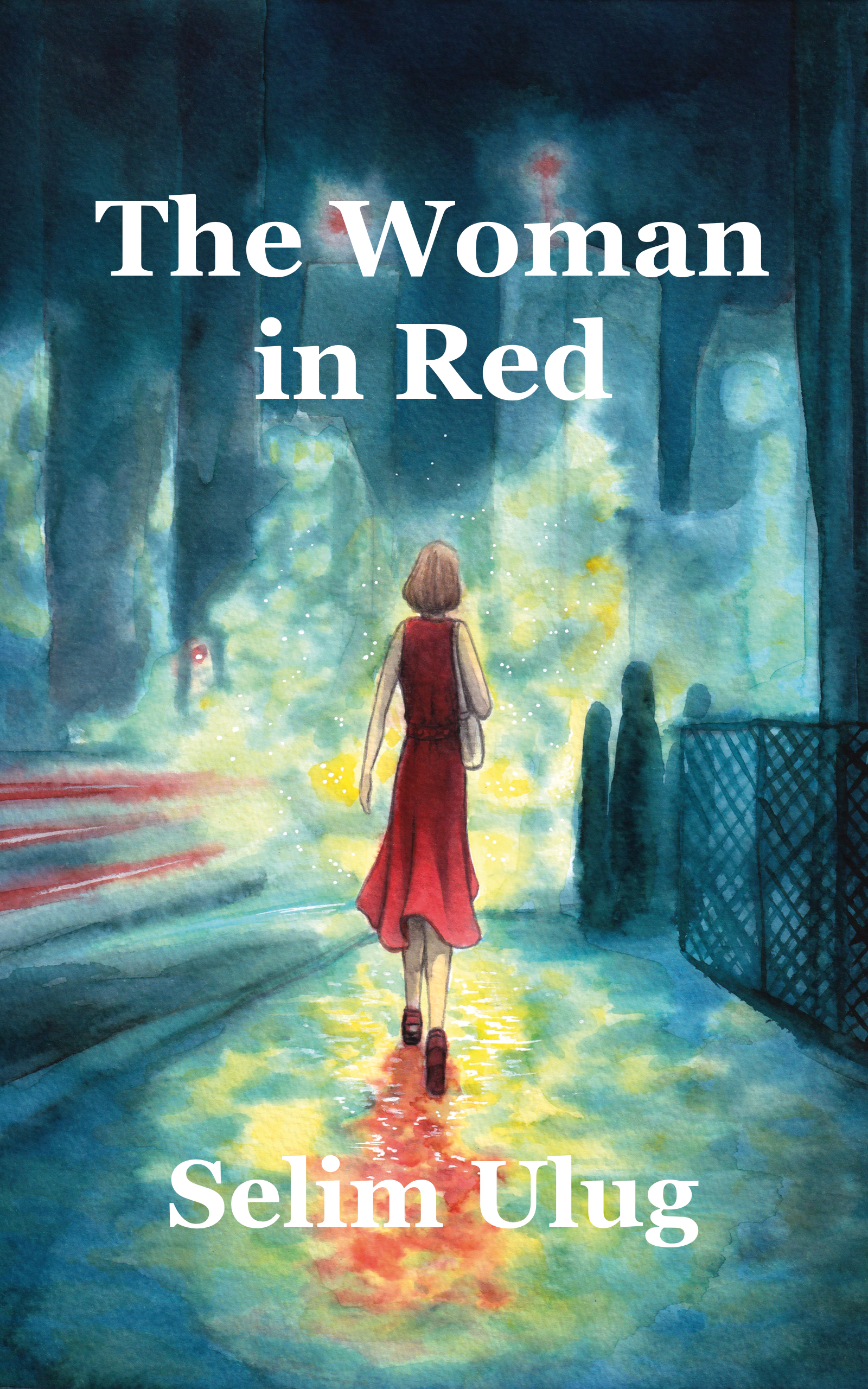
I hope you give the audio a listen and if you like it, please tell your friends. If you’d like to learn what happens next, there’s a sequel to “Remember Me?” in my second collection, The Woman in Red.

Something Special audio on YouTube

Something Special and The Woman in Red are available at your regional Amazon store. Go to the store and search for “Selim Ulug.”

On the Beach

Contains MASSIVE spoilers for the Silo stories and the Silo TV series.

The Silo series by Hugh Howey is a modern masterpiece of post-apocalyptic SF. The books form a trilogy with Wool, Shift and Dust. In addition, there are a trio of short stories included in the Silo Series eBook: “In the Air,” “In the Mountain,” and “In the Woods.”

It’s fair, I think, to say that Mr. Howey has a somewhat dim view of humanity. So dim, in fact, that one almost wonders why anyone in the story would bother trying to save humankind.

I did mention above that there are massive spoilers, right? So here goes.

The end of Dust gave us a bittersweet ending, in which most of the characters we’ve come to know are dead, but those who survive, including Juliette Nichols, find their way to a natural paradise.

The story “In the Woods” takes that away from us, and Juliette is seemingly killed by a pair of survivors who, filled with blind hate and anger, have mistakenly assumed that Juliette is the author of humanity’s destruction.

That’s where I said, “Nope.”

So, I’ve written a brief coda which gives me back a more hopeful view of the future in the world of Silo. I hope you enjoy it.


On the Beach

“So, how fast could they fly?” Jimmy, still known as Solo by much of the community, sat next to Charlotte scratching his head. 

“About mach 12 was the fastest that I know of,” Charlotte explained. Kneeling, she had been drawing diagrams in the sand. She found Jimmy surprisingly conversant with the basic principles of flying through his reading. The practice, or rather, the stories about the practice, seemed to perplex him. 

“What does that mean?”

“Mach 1 is the speed of sound. The speed at which sound travels through the air from point A to point B. When a plane flies faster than Mach 1, they used to say that they broke the sound barrier. You’d hear a loud ‘BOOM’ in the sky.”

“People must have loved that. Or did they get used to it?”

“There were rules about flying near cities—”

Charlotte was cut off, however, by a different kind of sound. A gunshot. She and Jimmy sprang to their feet, and, with horror, saw that Jules was going down. A woman with a gun stood in front of her. 

They ran. 

As they ran, they saw Elise notch arrows, bringing down the woman and then the man beside her who’d tried to pick up the gun. 

Charlotte and Solo stopped short, breathing heavily, shocked by the blood spurting from Juliette’s chest. Then Charlotte’s military training kicked in. She knelt down and pressed her right hand against the wound. 

“Find her father,” Charlotte said to Elise. Elise nodded and took off at speed. 

“Jules,” said Charlotte. “Juliette!” Using her left hand, Charlotte lifted each of Juliette’s eyelids. 

Jimmy was kneeling on the other side of Juliette, holding her hand. “She’s non-responsive and losing too much blood,” said Charlotte. “She shouldn’t be moved, but we need to get her to medical.” 

After scanning his surroundings, Jimmy said, “There’s a wheelbarrow. We can put her in there and get her to the doctor.” 

“Do it,” said Charlotte. 

Jimmy dashed to the wheelbarrow and back again. They loaded Juliette in. Jimmy took the handles and started off at a jog to the medical tent while Charlotte kept pace, trying to maintain pressure on the wound. 

#

Peter Nichols, Juliette’s father, had set up a clinic of sorts in a tent in the center of the settlement. He and Rickson formed a two-person medical team. Rickson had been learning by apprenticeship, and was now capable of applying first aid, setting broken bones and other simple tasks. They’d been back to the concrete tower for more of the supplies that Peter thought essential, including bandages, antibiotics and antivirals, surgical equipment, and more.

In the nearby woods, Peter Nichols and Rickson were treating a child who’d fallen from a tree. Peter stood back while Rickson examined the girl, touching her head, asking her to follow his fingers with his eyes, checking for anything broken. The girl winced when he touched her ribs. 

“You’ll be fine,” Rickson said. “You gave yourself a small bump on the head, and your ribs are bruised but not broken. Just rest for a couple of days and be a bit more careful climbing up trees.”

“Thanks!” said the girl as she got to her feet. Before Rickson could say another word, the girl dashed towards the river. 

Peter Nichols chuckled as Rickson packed the medical bag. “Some things never change. And thank goodness for that.”

A loud retort rang out, and they looked around for the source of the sound. 

“Hunting?” said Rickson. 

“I’m not sure,” said Dr. Nichols. “I hope so.”

They headed back to the settlement, walking quickly, their faces lined with worry. 

Elsie almost bowled them over. 

“Easy,” said Dr. Nichols. “What is it?”

Too winded to speak right away, Elsie pointed and then said, “Jules.”

“Oh no…” And with that Dr. Nichols ran faster than he would have believed possible. 

#

They met in the medical tent. Charlotte and Jimmy transferred Juliette to the table. 

“Oh, Jules,” said Dr. Nichols. To Rickson he said, “Let’s turn her over.” A quick glance confirmed the presence of an exit wound. 

“The shot was through and through. It doesn’t look like any vital organs were damaged, but it must have nicked an artery. We need to open her up and apply suture.”

Charlotte and Jimmy stepped outside of the tent, where a throng of people were gathered. “Juliette’s been shot,” reported Charlotte. “Her father is operating. All we can do is wait. And hope. Best to get on with what you were doing. We’ll let everyone know when there’s news.”

An hour later, Dr. Nichols emerged from the tent, wiping the sweat from his forehead with a handkerchief. 

“How is she?” said Jimmy. 

Dr. Nichols shook his head. 

“Oh no…” said Charlotte.

“What?” said Dr. Nichols. “No, it’s not that. The bleeding has stopped. She’s weak, still unconscious, but breathing regularly. It’s just that I’ve never seen the like. I scarcely had to do anything. Her body… it was like it was busy repairing itself.”

After breathing a sigh of relief, Charlotte said, “It’s the bots. Like I told you. The nanobots. They must have been pumped into Silo 17 at some point. That’s what they do: repair damage, keep you healthy.” 

“Well, for whatever reason, I think that Jules will make a full recovery.” After a pause, Dr. Nichols said, “Someone should stay with her. I’m needed elsewhere for a time.”

“We’ll stay,” said Jimmy. “We’ll take shifts if we have to.”

It was dawn the next day when Juliette’s eyes fluttered open. Jimmy, who’d been nearly dozing as his shift came to an end, reached for her hand. 

“Hey,” he said. “You’re back. Just a second.” With that, he dashed to the tent opening and called for Charlotte. 

“Here I am,” said Jimmy. “And here comes Charlotte.”

“How are you feeling?” said Charlotte, taking a seat on the other side. 

“Like I was shot,” mumbled Juliette. 

#

“Blood pressure’s still a bit low,” said Peter Nichols. “But your pulse is strong and regular and your wound has healed nicely. I’d say you were ready to get out of here.”

“Thanks, Dad,” said Juliette. “I think this is the longest I’ve been off my feet in years. It doesn’t feel right.”

“Well, just don’t overdo it. You know, with being the mayor.” 

Juliette nodded. “Not to worry. And Dad?”

“Yes?”

“Thanks. For everything.” With that, Juliette gave her father a kiss on the cheek and exited the tent… only to find the people from the settlement gathered all around. At the sight of her they started to cheer.

With a smile, Juliette held up her hands for silence. 

“Thank you so much,” she said. “I love you all. But I think it’s time that someone else became mayor in my stead. I can think of a couple of candidates…” and she cast a glance at Jimmy.

“Oh no,” said Jimmy. “Not me. I’m happy to help the mayor, but I’ve no desire to be the mayor.”

“In that case,” said Juliette. And she turned towards Charlotte. 

Bowing her head and sighing, Charlotte said, “If I must.”

“You have so much to teach everyone,” said Juliette. “And you’re a trained leader. You’ll be perfect. Let’s confirm it at a Town Hall tomorrow. Until then, Charlotte is interim mayor.”

There was another round of cheering. When it quietened, Juliette continued. “We have an enemy still. It’s hate. Hate that blinds you so you can’t see what’s right in front of you. There will always be people finding their way to us from the silos. Some of them will be angry. We have to help them to put aside their anger and hate, and give them a view of a future filled instead with love.” 

After a long round of applause, Juliette concluded. “And now, if no one minds, I’m a bit tired, so I’m going to get some rest while our new mayor gets ready to guide us into the future.”

Tipping the Time Scales

So a few days ago Grego Keith contacted me and expressed interest in having a chat as part of a collection of interviews on the Time Scales YouTube channel. The Time Scales is a website where users can comment on and rate, well, all sorts of things, including Doctor Who TV and audio episodes.

Me being me, I first checked who else Grego had been speaking to. When I saw that the list included Gary Russell, my first reaction was, well why does he want to speak to me? There are a lot of other well known faces there, including Sophie Aldred. My second reaction was to say, sure, let’s chat.

Grego was extremely welcoming and put me right at ease, which was great because I get awfully nervous about this kind of thing. The last time I’d been interviewed was around the time that Big Finish announced “Battle Scars” back in 2019. Before the world changed.

We ended up having a great chat and I thoroughly enjoyed the experience. We covered my writing journey, starting with sketches I would write as a kid, to my fan fiction, to Big Finish, and to the collections of original fiction I’ve self-published. We also touched on the two Alternative War fan audios that were recently released by TT Productions 23.

I hope you give the video a watch when you get the chance. And be sure to check out the other content in the Time Scale’s channel. I’ve just finished the first part of the Gary Russell interview and am looking forward to parts two and three.

Oh yes. Happy Doctor Who Podcast Day!

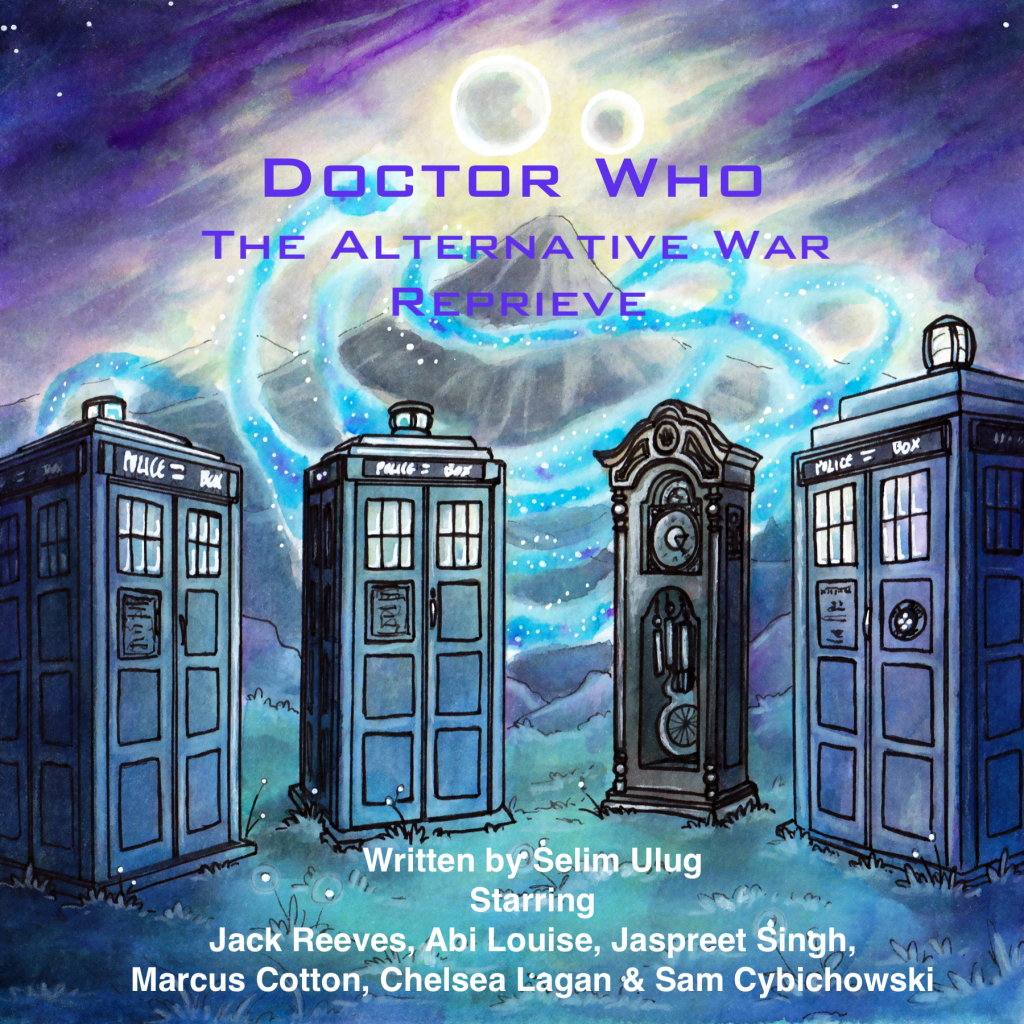
The Alternative War – Reprieve

Reprieve” is the second and probably last in the Doctor Who Alternative War series. In the first, simply called Doctor Who: The Alternative War, the Alternative universe diverges from the TV Doctor Who universe when the Eighth Doctor regenerates. In the Alternative universe, the Doctor regenerates into another Doctor, a woman, who meets fellow Time Lord Aliana and sets out to find a way to bring the Time War to an end.

In “Reprieve”, the Doctor has recently regenerated and is now a version of the Tenth Doctor that we know and love. But this time, he’s ginger.

The backstory behind the regeneration didn’t make it into the script, but here’s a synopsis: The Doctor sets out to gain intelligence on Dalek plans by infiltrating a Dalek ship. She is unable to penetrate the Dalek shields with the TARDIS, but finds a way to transmat inside. She finds that the Daleks have been hunting down a so-called Doomsday weapon. Whispers have hinted it is being developed by the Time Lords. Before she can finish, she is spotted by a Dalek and is shot. Meanwhile, Aliana has been furiously working to find a way past the Dalek shields and finds a means that should work just as the Doctor is shot. Throwing caution to the winds, Aliana materializes the TARDIS around the Doctor and they escape.

The Doctor and Aliana have had numerous adventures since the first episode, and Aliana has grown and matured. As “Reprieve” takes place, she and the Doctor have almost reversed roles, Aliana being the steading influence on the impulsive Tenth Doctor of this universe. We also learn of Aliana’s backstory, and how she was able to find the Doctor just at the moment he regenerated on Karn.

As with many of my stories, “Reprieve” is mostly character-based. More character, less running down corridors. And in this story, there are more Doctors than usual. Three, specifically: the tenth, eleventh, and third. Ten and Eleven are played by the ever-brilliant Jack Reeves, and Three is played with love and gusto by the inimitable Jaspreet Singh. As for villains, well, there are three of those as well: The War Master, as well as … well, let’s not spoil it. They’re original characters, so you won’t know them, but as played by Chelsea Lagan and Sam Cybichowski I could listen to them all day.

What else will you find in “Reprieve?” Well, there are loads of references to classic sci-fi and fantasy. And the Third Doctor gets to reverse the polarity and drive some pretty hot wheels.

Really, what else could you ask for in a Doctor Who story? Especially when played by such an amazing cast, and with such great sound design courtesy of the indefatigable Abi Louise, who seems to be a master of just about everything. Basically, Abi and TT Productions 23 are awesome.

Doctor Who: The Alternative War can be found here: https://youtu.be/NaREhegyddw

Doctor Who: The Alternative War – Reprieve can be found here: https://youtu.be/q_if3Z5HKWc

The Debut of “Reprieve”

The debut of the new Doctor Who (fan fiction) audio play is on Wednesday, July 5th, at 7 PM UK time. Doctor Who: The Alternative War — Reprieve is a light-hearted, multi-Doctor story set in an alternative universe during the Time War.

Hope you’re able to join us and that you enjoy it. We have an amazing cast and a stellar production so I’m looking forward to hearing what you think of it.

You can find it here: https://youtu.be/q_if3Z5HKWc

Plotting Backwards and Forward

Contains major spoilers for Star Trek: Picard

In the commentary for Serenity, the movie follow-on to the short lived and much beloved series Firefly, Joss Whedon became particularly animated at the pivotal moment when we see River posed with a pair of axes while, strewn around her, lay the bodies of fallen Reavers.

This moment, it seems, was the starting point, the inspiration for the entire movie. And it was the climax. From that moment, Whedon worked backwards, answering for himself the question, “What led to this point?”

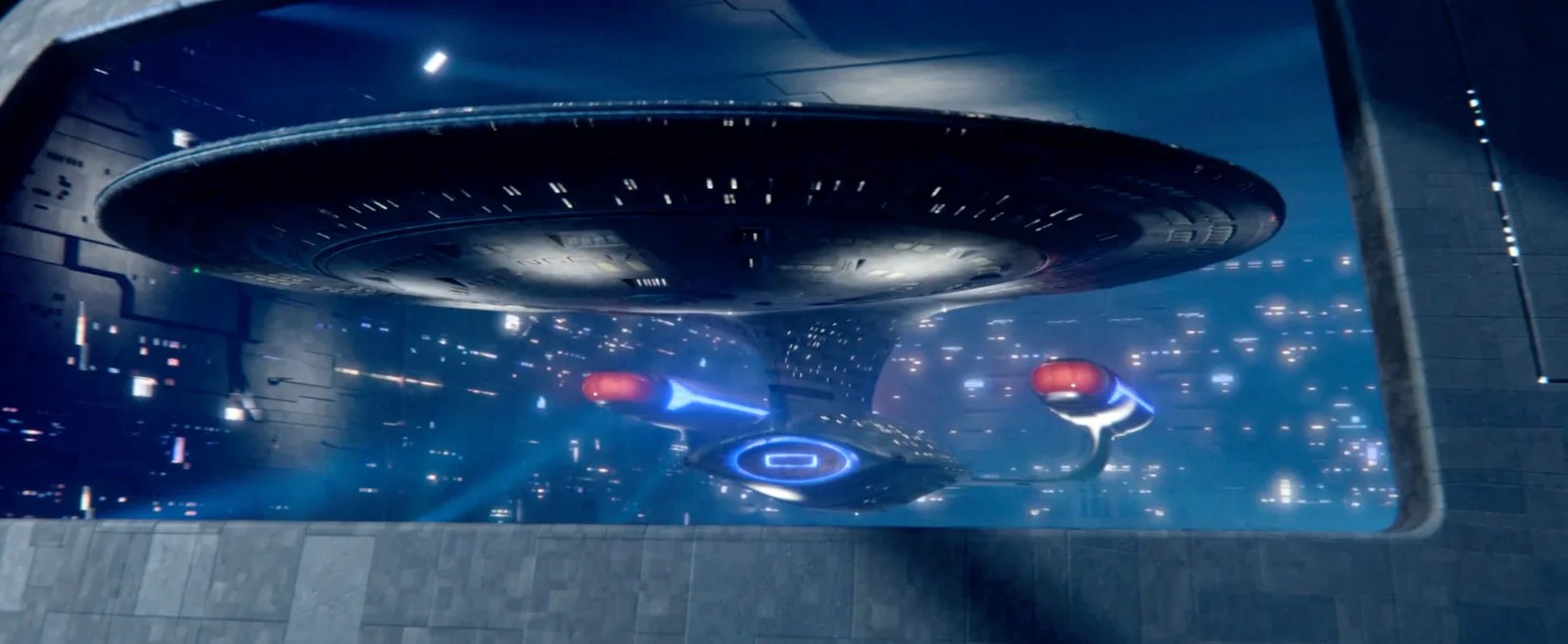
I suspect the plot for Star Trek: Picard S3 was similarly driven by the moment when the reunited TNG crew exited space dock in a newly reconstituted Enterprise-D. This was the moment the writers had to get to. Now, what led to it?

There would have been many questions. Why would they need an old, Galaxy-class starship? Well, they would need it if there was a problem with the newer models. What problem? And so on. The Enterprise-D launches in episode 9 of 10, and I would argue that, no matter what happens in episode 10, this represents the climax of the story. The rest — stopping the Borg attack, expunging the Borg portion of the young drones, rescuing Jack — is part of the tidying up that has to happen before we let our heroes go forth to Live Long and Prosper.

All this to say that a good story doesn’t necessarily stem from a vision of the start of it all. You might think of a moment that occurs at the end of Act 1, Act2 or near the end of Act 3. It doesn’t matter. From that moment, you can work backwards and forwards until your story is complete.

One last comment about Star Trek. I was never a huge fan of TNG (he says to the sound of collected gasps). But there certainly were some classic episodes, in particular, “All Good Things”, “The Inner Light”, “Yesterday’s Enterprise”, and “The Best of Both Worlds.” Star Trek: Picard S3, meanwhile, all of it, is a Very Good Story. In fact, I would argue, as of episode 9, that it represents the best that Star Trek has ever been. Why is that? Because of the story. Because of the script. A because the cast has matured into actors who can believably portray complex emotions and pull us along with them.

Vampire Justice

If you watch The Rookie: Feds, you’ll have finally caught a glimpse of character Brendon Acres playing Vampire Cop. This was the titular character of a defunct TV show in which he starred prior to joining the FBI.

We all want more.

Sadly, I can’t give you more, but it turns out that in my short story, “Don’t Ever Change”, there is a similar story within a story. It concerns actor Alan Fitts playing the justice-dealing vampire Charles Wardell.

Here it is. I hope you enjoy it.

#

A slow knock at the door. Angelika Labelle’s eyes widen. She is seated upon a divan in front of the hearth, her face illuminated by the blazing fire within. The camera pulls back, and we see that the apartment is lit with candles, yielding areas of light and shadow. This is accentuated by the stark black-and-white photography. Decorations include antique cabinets and clocks, a hand-woven Turkish carpet, an intricately carved coffee table, and small Renaissance-era oil paintings. Another knock and she stands, adjusts her close-fitting dress, and sashays to the door. 

She opens the door slowly. There is a man standing in the corridor, hands folded behind him. He wears a black suit with a dark-grey shirt and a grey-and-black-striped tie. The corridor light is garishly bright, causing the woman to blink and raise her hand over her eyes.

A smile comes to Angelika’s face. She lowers her head slightly and looks up at the visitor, eyes half lidded. “Well this is a welcome surprise.”

“May I come in?” says Charles Bardell. 

Angelika steps back and waves her arm. Charles enters, and she closes the door behind him.

Stepping in front of the hearth, Charles regards the flames; the light dances in his dark eyes. 

“Wine?” asks Angelika, moving to the buffet. She reaches for a decanter filled with red liquid. 

“No,” says Charles. “No, I’m here on business.”

“Business,” says Angelika, as she moves towards Charles. “Well now I am intrigued.”

Charles turns rapidly and grasps Angelika by the forearm. 

“Charles!” Angelika’s eyes widen. “What are you doing?”

“You killed them. Those men. Why?”

Angelika blinks and her mouth opens slightly. Then, composing herself, she looks away. “I’m sure I’ve no idea what you’re talking about.”

“You seduced Doctor Boreanaz and blackmailed him. He provided you with the insulin and syringes you needed.”

“My, you are fanciful. Why on earth would I do such a thing?”

“They uncovered the truth about your past. As have I.”

Charles lets go of her then, and Angelika backs away, eyebrows raised. “What are you going to do?”

“Deliver justice.”

Angelika laughs. Moving to the buffet again, she pours a glass of wine, giving away a slight tremor in her hand, and takes a sip. “So,” she says, “you’re a policeman now?”

“I’m no policeman.” His words sound like a low growl. Approaching her once again, his face is dark with both anger and sadness. And something else. Hunger?

Angelika tries to back away but bumps into the buffet. Setting down her glass, she rests her shaking hands on the surface behind her. Charles approaches and bends so that he is very close to her neck. The camera closes in, showing the pores of her skin and his open mouth with its white teeth. 

“Charles, this is hardly the time,” Angelika says weakly, her body trembling.

“This is the only time,” Charles whispers.

His canines grow, and when they reach full length, Charles bites down on her carotid and drinks deeply. The camera moves to his eyes. They’re alight with energy. The camera pulls away and focuses on the roaring fire in the hearth. 

#

In “Don’t Ever Change,” people are inexplicably dying after meeting Alan Fitts, and someone starts to wonder if he mightn’t actually be some kind of vampire. You can find the story in my collection, Something Special, available at Amazon.

The Revisited Frontier

I’d like to tell you a story, a true one, about Star Trek: The Motion Picture.

STTMP was released in December 1979, a decade after the TV show was canceled. Up until then, those of us who loved Trek had been subsisting on reruns and novels. The first Trek novel was fittingly written by James Blish, who had novelized the TV episodes. Spock Must Die was derivative but with a twist and it was an enjoyable read. I recall tremendously enjoying The Price of the Phoenix by Sondra Marshak and Myrna Culbreath, a book that made clear the untapped potential of Star Trek.

But then word came that a movie was in the offing, and fans held their collective breath. This was in the wake of the massive success of Star Wars, and the studios were looking for intellectual property they could leverage to reach similar heights. Science fiction movies, after all, were suddenly “in”, and a Star Trek movie must have seemed a no-brainer.

Ottawa’s Elgin Theatre

And so, after a long buildup and a seemingly endless wait, it was released. In Ottawa, Star Trek: The Motion Picture opened at the Elgin theatre downtown. This was in the days before cineplexes. When you entered a movie theatre, there was a small area in which you could purchase tickets and snacks, and then you proceeded directly to the auditorium. When there was a lineup, you waited outside. Now, we’re talking about Ottawa in December in the 1970’s. Winters were very cold. There was a lot of snow. And the night my roommate and I walked to the theatre, it was cold and dark with tall piles of snow all around us. As it turned out, although we arrived early, the showing was sold out. So we and a lot of other people stood outside and waited to get into the next one. Why? Because this was STAR TREK. And we were highly motivated. And young. That helps too.

I want to emphasize, in case it isn’t obvious, that the audience was really was up for this. I don’t mean that expectations were sky high, but rather, that it would have been easy to make us happy. An above average episode would have done it.

After a long wait in the cold winter night, we took our seats. The lights dimmed, and there was applause before the movie even left dry dock. The opening credits rolled on the screen. William Shatner. YAY! Leonard Nimoy. YAY! And so on.

Sadly, that enthusiasm waned rather quickly, and at times the audience laughed at the movie. Not with the movie. At the movie. “[Bones.] I need you. Badly.” Laughter. Later on, “You mean this machine wants to physically join with a human?” Decker and Illia exchange longing glances. Laughter. There were probably other examples, I don’t remember. In the end, as the grumbling, disappointed audience left their seats, the feeling was that the plot was derivative (see the episode “The Changling”), the script was wooden, and the actors spent far too much time staring out the window in wonder.

William Shatner was among those unhappy with the result. After The Wrath of Khan was released to near rapturous reviews, he pointed out that STTMP had a much higher budget (in fact, it was the most expensive movie ever made at the time) but “it wasn’t a good movie.” His words. TWoK, he said, had a smaller budget, but was a much better one.

There are some positives, of course. One review at the time said that STTMP was nearer in tone to 2001: A Space Odyssey than to Star Wars, and that this was the ultimate compliment. In retrospect, it’s quite something to see the cast looking so young and fit. William Shatner had gained quite a bit of weight after Star Trek was cancelled, but to his credit he got himself back in fighting trim for the movie. There were certainly some amazing visuals. In the Director’s Edition, the special effects were completed and missing scenes reinserted. These helped to make sense of the thing. In particular, the scene where Spock realizes that V’ger is incapable of understanding the simplest (of human) feelings was one of the best in the revised movie.

If you like STTMP, I’m not trying to tell you that you’re wrong, not by any means. Obviously, there is no concept of wrong. Art touches everybody differently. But I have to be honest and say I’m puzzled by the number of very positive comments I’ve seen lately, particularly since the 4K version was released. I’m well aware that a movie shot on film can appear quite spectacular in 4K, but improving the visuals does nothing to solve the problems listed above. For a generation who was hungry for more Trek, we who viewed the film upon its release felt that STTMP limped out of dry dock on impulse power alone. The Enterprise didn’t achieve warp speed until the release of The Wrath of Khan.

On the Passing of Queen Elizabeth II

I first saw Queen Elizabeth in a motorcade while she was on her way to Woodbine Racetrack in Toronto. I was outraged. “She’s not wearing a crown!” I screeched in disappointment to my mother. I was four years old. I’ve seen her at least a couple of times since then, and with my expectations set, have not since complained about the absence of a crown.

The Red Ensign

Elizabeth gained her crown in 1952, and she was the longest reigning Commonwealth Monarch in history. The only one, in fact, that many of us have known. When I was growing up, Canada had much more of an English colony mentality, and wore those trappings proudly. Photos of the Queen were everywhere. We sang “God Save the Queen” every morning in class. The mail arrived courtesy of the Royal Mail. That changed over time in an effort to give Canada more of an identify of its own. The Red Ensign, the flag used to represent Canada from Confederation through to the 1960’s, was replaced by the current Canadian flag. “God Save the Queen” was largely replaced by “O Canada.” The mail service was rebranded as Canada Post.

Throughout, the Queen was never far away, even if she was a bit more out of sight. To this day, trial prosecutors in Canada are referred to as Crown Attorneys, contractors to the Canadian Government are to deliver their goods and services to Her Majesty, and legislation only becomes law by virtue of Royal Assent. The Crown remains Canada’s Head of State, represented by the Governor General at the federal level, and by Lieutenant Governors at the provincial level. In other words, the Crown, as it always has been, is an inescapable and essential part of life in Canada.

As for the monarchy as an institution, some people love it, some hate it, and the more pragmatic simply shrug and move on. For the most part, it has worked for a long time and has been viewed as alternatively harmless or even potentially beneficial. For instance, former Canadian Prime Minister John Diefenbaker made the case that the American Watergate scandal couldn’t happen in Canada. If the Prime Minister was embroiled in such a scandal, Diefenbaker opined, the Governor General could dissolve parliament and call an election. The thing is, we now know that this wouldn’t happen.

A few years ago, Prime Minister Stephen Harper did something that no other Canadian prime minister had done. He requested that the Governor General prorogue parliament. His minority government, you see, was certain to lose a non confidence motion in the House of Commons. After consulting with constitutional lawyers, the Governor General assented. The reasoning was that the Prime Minister was elected and the Governor General was not. The problem with this precedent is that it removes important checks and balances from our system of government. The Prime Minister shouldn’t have the power to suspend parliament whenever its convenient. If Royal Assent is virtually guaranteed no matter the request, we would be better served by an elected head of state who could legitimately say no when that was appropriate. So, to make it explicit, I do wish Canada could move towards an elected head of state.

But now pragmatism rears its ugly head. Changing the Canadian constitution requires the agreement of at least seven out of ten provinces representing at least 50% of the population. The fact is, no one can get the provinces to agree on the day of the week, let alone major constitutional changes. So, at least as far as Canada is concerned, the monarchy will be around for a good while yet.

It’s been interesting to look at the varied reactions of people in response to the Queen’s death. Some are sorrowful, some are flinging vitriol at her and the institution, and some use the occasion to attempt jokes. So what do I think about it all? I think that nobody asks to be born into the royal family, and that, basically, it would suck to be them. Because their future is written. Yes, they may be rich and famous, but they can’t grow up to become astronauts or authors or doctors or carpenters. They lack many of the freedoms that the rest of us take for granted. When the Queen was young there was little chance that she would become monarch. Perhaps that allowed her a slightly more normal childhood. That changed of course, when King Edward abdicated and George, Elizabeth’s father, became King. Not only had Elizabeth not expected to become monarch, she was thrust into the role while in her twenties. And yet she did so with grace and elegance and along the way became one of the most recognized and beloved leaders in the world.

In my opinion, it’s disingenuous to rail at the monarchy, and the Queen specifically, and visit upon them the entirety of the sins of the British Empire. Firstly, they didn’t ask for the job, it was thrust upon them. And secondly, someone has to do the job. You can’t deride a member of the royal family for assuming the crown when the fact is that there has to be a head of state. I think all that energy would be more usefully spent in promoting the idea of a republic using reasoned arguments. Raise the subject at political meetings. Lobby political parties to add support for an elected head of state to their platforms. Until there is broad public and political support for such a change, it’s not going to happen. So if you feel strongly that change is needed, you’d best get to work.

Some of the little things I loved about Queen Elizabeth: her infectious smile, and her calm, reassuring presence that’s been a constant throughout my life. She always strove to bring people together by highlighting what we had in common. And there was also her sense of being a good sport. My eyes nearly popped out of my head during the opening of the 2012 Olympics when she calmly said, “Good evening, Mr. Bond.” Then there was her tea with Paddington Bear at the Platinum Jubilee. Priceless.

The thing is, I’ve been around long enough that, with precious few exceptions, nearly everyone who was an adult when I was a child is gone. The loss of Queen Elizabeth marks one more lost connection with that time of my life. And for all the reasons listed above, I shall mourn Elizabeth II.