Category Archives: Uncategorized

Intolerance in Writing and Writers

While growing up, I devoured the works of Edgar Rice Burroughs and H.P. Lovecraft, and a visit to a bookstore seemed as magical as a trip to Ali Baba’s cave. Caught in the web of Burroughs writing, I could swear I was swinging through the trees with Tarzan, or fighting all sorts of nightmares to win the hand of Barsoom’s Dejah Thoris. And as for Lovecraft, well, he just scared the hell out of me. I loved it.

Sadly, Burroughs hasn’t aged very well. In his day, Burroughs got away with populating Africa with all manor of lost civilizations deep in the unexplored forests of the “dark continent”. A hard sell, however, in the era of Google Earth.

And as for traveling to Mars by… wishing yourself there? A bit much for even young children to swallow today. Mind you, do you remember the story that Carl Sagan related while hosting the original Cosmos? After reading John Carter of Mars, he ascended a hilltop and wished and wished and wished. But, sadly, he never found himself transported to the red planet.

Then there’s the quaint notion that, to make his mark, man is destined to tear apart nature and build things like railroads and smokestacks. Witness the Pellucidar books, where our heroes find themselves in an ancient, primeval forest in the centre of the Earth. Their hearts swell with pride after they’ve cut down trees, lain tracks, and constructed steam-engine trains that puff thick smoke into the pristine air.

Finally, even if we grant that Burrough’s audience is/was primarily boys, aged, say, 9-12, his books have structural problems with his over-reliance on the most amazing coincidences. So yes, it’s kind of hard to go back to these books, nostalgic as one might be.

1458759156549.jpegH.P. Lovecraft has fared better, and is still regarded as a major figure in horror literature.  While his writing style is definitely of the old school–Lovecraft loved old things and old places–he is still able to make your skin crawl, and, when he wants to, can dazzle you with beautiful prose. The novella, “The Dream Quest of Unknown Kadath”, begins thusly:

Three times Randolph Carter dreamed of the marvellous city, and three times was he snatched away while still he paused on the high terrace above it. All golden and lovely it blazed in the sunset, with walls, temples, colonnades and arched bridges of veined marble, silver-basined fountains of prismatic spray in broad squares and perfumed gardens, and wide streets marching between delicate trees and blossom-laden urns and ivory statues in gleaming rows; while on steep northward slopes climbed tiers of red roofs and old peaked gables harbouring little lanes of grassy cobbles.

I never tire of that opening.

While we can agree that Lovecraft didn’t expend a lot of energy into fully fleshing out his characters, that was never the point. The point was to develop an atmosphere of dread that would have the hairs on the back of your neck stand up and your body temperature drop a couple of degrees; to make you begin to doubt the veracity of your own senses; to create a world where the old gods, separated from our plane of existence by the flimsiest of veils, hungered for our souls.

Yikes!

Lovecraft could also be oddly prophetic, as in this excerpt from “The Call of Cthulu”:

The most merciful thing in the world, I think, is the inability of the human mind to correlate all its contents. We live on a placid island of ignorance in the midst of black seas of infinity, and it was not meant that we should voyage far. The sciences, each straining in its own direction, have thitherto harmed us little; but some day the piecing together of dissociated knowledge will open up such terrifying vistas of reality, and of our frightful position therein, that we shall either go mad from the revelation or flee from the light into the peace and safety of a new dark age.

Could it be that the discoveries of modern science have caused some to go mad, seeking a new dark age where the climate isn’t changing, evolution never happened, and vaccines are to be avoided at all costs? Perhaps. But that’s a blog post for another time.

But now we get to the crux of the problem, which is the intolerance expressed in the stories of these and other writers. For example, in Burrough’s At the Earth’s Core:

“A white man!” he cried. “May the good Lord be praised! I have been watching you for hours, hoping against hope that THIS time there would be a white man.”

And as for Lovecraft, this quote from “The Case of Charles Dexter Ward” will indeed make your skin crawl, but not in a good way:

Here his only visible servants, farmers, and caretakers were a sullen pair of aged Narragansett Indians; the husband dumb and curiously scarred, and the wife of a very repulsive cast of countenance, probably due to a mixture of negro blood.

One could point to many other authors, including Enid Blyton with her Golliwog characters, Ian Fleming’s James Bond referring to Italians as a bunch of “spaghetti eaters”, going right back to the controversial Shylock in Shakespeare’s “The Merchant of Venice”.

What do you do with books like these? One answer, I suppose, is to put them away. But to not read some of the greatest, most beloved authors of all time? It seems unthinkable. To a large extent, I believe, these authors were a product of the age in which they lived, though some, like Lovecraft, through his love of times gone by, may have reflected even earlier beliefs and prejudices. We know that prejudice must have been part of the social norms of the time. How else could such stories have been published?

My inclination is to follow the advice of B. J. Harrison. In in his Classic Tales podcast, Harrison reads aloud books and stories that are, well, classics. Noting the presence of anachronistic prejudice in one story, he said something like this (I’m paraphrasing from memory): Perhaps we should view stories such as these as a lens through which we can see how far we have come.

Consider now the case of the World Fantasy award trophy. I was initially disappointed upon hearing that it would no longer be modelled after H. P. Lovecraft. But digging into the reasoning led me to understood completely. After all, suppose you were, say, a gay black author, that you won a World Fantasy award, and thereafter had to stare into the disapproving glare of Lovecraft from your fireplace mantle. No, I wouldn’t care for that either. In fact, it sounds like a suitable basis for a horror story…

There’s an even thornier question: What to do about intolerance expressed by current authors? Today, no one would get away with the kind of prejudice shown in the examples above (unless you were giving voice to a character with prejudice). That’s not the problem. The problem is when a published author promotes opinions or beliefs that you find offensive. For me, two authors come immediately to mind, one dead, one living. Both have written classic books in the SF&F genre. But while their books may be benign, I find their voiced beliefs and opinions to be offensive. Initially I tried to put that aside, concentrating on the book, not the author. In the end I found that the books suffered from guilt by association. I just can’t and won’t support them any longer.

This is an essay without any conclusion, I’m afraid, except to note that each of us, when faced with these kinds of moral dilemmas, has got to do what we’ve got to do. However, there’s one thing we can’t do under any circumstances, and that’s to ban books outright. That only deprives us of the opportunity to think and to follow our own path.


Public Transit Done Right.

A while ago, I wrote a posted entitled “Do Me a Solid“. It was a passing tribute to those products that just work. It seems there just aren’t enough of those around these days.

I’ve always been a fan of public transit. Here in Ottawa, it works fairly well if you live in the west end of the city and work downtown. There are bus lanes on the highway and bus-only transit ways to speed you on your way. During rush hour, buses run every few minutes. Parking downtown is very expensive. The bus, while not cheap, is cheaper and it gives you an opportunity to get some fresh air and see new faces. And, given rush hour traffic, you can often reach your destination faster than by driving.

So, public transit in Ottawa works fairly well, but those who live in the east end, or those that live in the city and work in the west end wouldn’t exactly describe it as “solid”.

1280px-Zuerich_Hauptbahnhof-2This summer I spent a few days in Zurich, Switzerland. Now there is a public transit system that is solid in every way. Their public transit is based on trams that connect to the central train station. At each tram station, there’s an automated ticket dispenser that supports English, German, French and Italian. A series of on-screen choices guides you to the ticket you want. Frequently requested tickets, such as to the Zurich airport, are right on the home screen. You can pay with credit card, or, since Switzerland widely supports tap-and-pay, you can use your smart phone. Overhead displays count down the minutes until the next tram’s arrival.

Trams run frequently and efficiently and on time. Just like a Swiss watch. So do trains. It’s surprisingly easy to find your way around the Zurich train station and it’s 30+ tracks. Yellow schedule boards, valid for twelve months, give you all the information you need, sorted by time. So, you can look up the next train for Lucerne that leaves on or after 10 AM, for example.

We had Swiss travel passes that gave us access to trams, trains and some museums and tours. We just had to show up and board. Once in a while, inspectors show up to verify your passes.

To sum up, the Swiss public transportation system is a joy to use. It just works.
It’s solid.

Oh yes. The scenery’s pretty nice too.


Going Off Script

Writing the script for an audio play is an interesting experience. I’d never done it before. The sum total of my fiction writing consists of short stories in the traditional form, original and fanfiction, and one novel currently in progress (it’s been in progress for quite some time, but that’s another story). 

The thing about an audio script is that there’s no narrator. Well, I guess there could be, but in my script there was none. And there’s no descriptive text. Nothing, really, but dialog and place holders for sound effects. Those are the tools at your disposal. 

Dialog becomes subtly different. Sometimes characters have to talk to themselves when they are alone in a scene, otherwise the listener would have no idea what was going on. When more than one character is present, you sometimes have to include descriptions of surroundings that, in TV or movies, would require only a camera shot to give you the information you need. 

“Look at that!”

“It’s a wall of metal. I’ve never seen one so tall.”

You get the idea. 

This may be why I’ve always found the book, TV and movie adaptations of The Hitchhiker’s Guide to the Galaxy unstatisfying. The script was originally written for an audio play. So when Arthur Dent screeches, “What the hell is that!?” And Ford Prefect calmly answers, “It’s a fleet of flying saucers”, that works on audio. In a visual medium, the camera would simply show you a fleet of flying saucers. For me, it’s the original audio version that’s the real McCoy.  

Last year I was invited to contribute a script to what would have been a series of Doctor Who fanfiction audio dramas. That series never materialized and was presumably lost in the Time Vortex. Still, writing it was tremendous fun and now I’m pleased to add that script to the collection of fanfiction on this site. Click on “FanFiction” at the top of this page, then on “Resurgence of the Cybermen”. 

A Cacophony of Caskett Heartbreak

There’s a TV show called Castle. It’s quite popular and is in its eighth season. I’ve written a few fanfiction stories set in the Castle universe.

If you are aware of the show, then you might be aware of the explosion of outrage on the Internet over the release of two of the actors who have been part of the show since the beginning: Stana Katic, who played Detective Kate Beckett, and Tamala Jones, who played Dr. Lanie Parish. If there is a season 9 (unknown at the time of writing), they won’t be in the cast.

Applicable Twitter hashtags include: #Castle, #IStandWithStana, #SaveCaskett, and #NoStanaNoCastle.

Tamala Jones will be missed as hers is a strong female character, still an oddity in 21st century media, and is a medical examiner to boot. Her character has had an on again, off again relationship with Javier Esposito, has lobbed more than a few zingers in Castle’s direction, and has served as a confidante for Beckett. If there is no Beckett, however, there is less need for Parish.

As for Stana Katic, in the beginning, her character viewed Castle as an irritant. Over the course of time, their mutual trust and respect grew, and they found themselves falling in love, even if one or the other wasn’t prepared to admit it. Finally, they were engaged and then married.

Stana-Nathan-nathan-fillion-and-stana-katic-26237395-542-594What’s been so engaging about the Beckett-Castle relationship is the apparent chemistry between the two actors, and the range of emotions they display so unerringly. They are, truly, a very cute couple. This relationship is a key anchor point for many viewers, who have immensely enjoyed the show over the years.

Here’s the thing, though. While the Beckett-Castle relationship has been a great story, there comes a time when a story has been told, and whatever follows is simply potboiling. That’s not to say there aren’t necessarily more Castle stories, but really, what else could you do with the Beckett-Castle relationship other than an endless cycle of bringing them together, separating them on some pretext or other, then bringing them together again.

If I was writing for Castle, I’d be chaffing at the bit to tell some different types of stories. In an effort to shake things up, they had Castle disappear for a few months (over the summer break, mind you) and reappear with his mind wiped. I found that to be a very weak storyline. Similarly, this season, Beckett left Castle so that he wouldn’t become a casualty in her investigation of the death of her former colleagues. And yet, they still saw each other every week. Inevitably, after the Christmas break, Castle and Beckett got back together again.

Let’s consider another show that I enjoy, Doctor Who. While the show was off the air for a number of years, it recently celebrated its fiftieth anniversary. What is it that keeps it going? A simple answer might be that it has all of space and time for its characters to explore, but its more than that. Characters come and characters go, no matter how beloved. The Doctor, the central character, has remained, but every three or four years a new actor takes the part. What keeps a series fresh is change. Fresh actors, fresh storylines, fresh villains.

If Castle is to continue with strong stories, and not just potboilers, it needs to change as well. One very pleasant surprise this season is the development of Castle’s daughter, Alexis, played by Molly Quinn, as an adult foil for her father. I can easily imagine some great stories centred around Richard Castle, P.I., working and trading witticisms with two strong women, Alexis and the intriguing Hayley Shipton, played by Toks Olagundoye. Why not?

So let’s put things in perspective. There was no “Caskett” in the early years, yet we watched the show. Personally, I preferred the battle of the sexes feel of those years. It put me in mind of the old Spencer Tracy, Katherine Hepburn films.

Be that as it may, if you can’t imagine Castle without “Caskett”, there’s a simple solution. First, turn off the TV. Much simpler and less work than advocating cancelling the show. Second, read/write some AU fanfiction in which they’re kissing and making babies and solving mysteries and living happily ever after.

As for me, if season 9 happens, I’m certainly going to give it a try.

The Horror!


Horror has changed.

Once upon a time, on a dark and story night, horror was Frankenstein’s monster, the Wolf Man, or Dracula. Or all three.

When I was a kid, Abbott and Costello Meet Frankenstein was on TV one afternoon while my mother was ironing. I was able to stick with it until Lawrence Talbot spied a full moon and, well, you know what came next.

abbottcostellofrankenstein“MOM!” I screeched. “Change the channel.”
She dutifully did so, switching to a soap opera. After a while I calmed down and begged her to go back to the movie. I was fine then, at least until Talbot’s next transformation.

“MOM! Change the channel!”

I loved it. Loved getting scared right to death. And I still do to this day.

When I was in my early teens, I discovered H.P. Lovecraft, and immediately fell in love. The Dream Quest of Unknown Kadath remains one of my favourite books. How could you not be scared when the Old Gods were after you? Or when rubbery, foul-smelling, ameboid-shaped abominations poked and prodded you as you descended fitfully to the Dream World and left your sanity behind, one step at a time?

As I started to wonder about writing horror fiction, and I read some horror anthologies and sources such as Nightmare magazine, I started to think about what constitutes horror fiction today. It occurred to me that horror has changed. It’s not so much about monsters in the dark any more. There may well be monsters in the dark, but the real horror is what those humans trapped in the house do to each other while the monsters lurk outside.

The classic modern example is TV’s The Walking Dead, a show brilliant in its writing and acting, but so dark and bleak that I stopped watching around the third season. Yes, there are zombies all about, but even as the world falls apart around their ears, people are still hungry for power, for the chance to one-up each other, and as ever, there are romantic triangles.

The idea, I think, is that when horror exists, we discover some truth about ourselves, something we prefer not to think about, a quality better left unspoken. And man, that’s frightening. 

Protagonist Purgatory

Hi folks,

I’ve added a new, original story to the site. You can find it by selecting “Original Fiction” near the top, then selecting “Protagonist Purgatory“. It’s a sequel of sorts to “Where the Dragons Sleep” and “The Right Time” but can be read independently. It attempts to be light-hearted. Whether it succeeds is for you to decide.

If you’re squeamish about strong language, best stay away. One of the characters drops the F-Bomb pretty much every time he opens his mouth. But we’ve all known that guy, haven’t we?

Here’s a quick excerpt:

“What?” said Dromhiller. “You saw a dragon?”

Michael nodded. “It flew overhead just a little while ago.”

“Well, that’s more like it,” Dromhiller said. “Now I’ve something to look forward to.”

“So there were dragons in your story?”

“Sure. Well, at least until I killed them. You?”

“No dragons,” said Michael. “There was a unicorn, though. And a few other magical creatures.”

Dromhiller laughed out loud and nearly choked. “A unicorn! You’ve got to be kidding me. Didn’t appear until the end of the story, though, did it?”

“Right at the start, actually,” Michael said. “Then again towards the end.”

Dromhiller, doubled over with laughter, stopped. Catching his breath, he said, “A ******* unicorn! Right at the start. Let me guess. Story didn’t sell, did it?”

Enjoy!

He’s Dead, Jim

The thing that most shocks people out of their skulls when they read George R. R. Martin’s A Song of Ice and Fire series is the abandon with which he kills off major characters. Characters so major that you’ve assumed all along that the series is about them.

Ask any writer, and I think they’ll tell you that their characters become a kind of family. After all, you come to know them so well that you hear their voices in your head. So killing them is not something done lightly. The question is, why kill off major characters at all?

One reason might be to reflect the times in which the characters live. If you read Charles Dickens, you’ll find it entirely possible in some books to lose count of the number of deaths. But consider: in the 1800’s, one in five children were dead by age five, and those who survived childhood could expect to be dead by forty. Death in those times was very much a part of life.

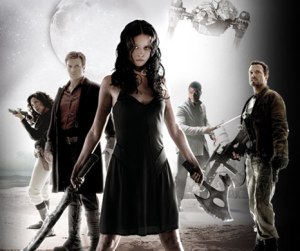
serenityAnother reason is what I call the Joss Whedon effect. Fans of the TV series Firefly were, to put it mildly, shocked that two major characters were killed in the follow-up movie, Serenity. The reason for this, as Joss Whedon explained in the movie commentary, was to place some doubt in the minds of the audience as to whether or not the remaining characters would survive. After all, in most stories, no matter how harrowing the action, the major characters generally pull through. The only real question is, how will they pull through? By killing two characters, Whedon shook us out of our complacency and really made us wonder not just how, but if our beloved characters would survive.

This line of thinking was prompted by a comment I received regarding one of my fanfic stories. “Western Castle” is an alternate universe version of Castle set in the wild west. In that story, I killed off one of the major characters. Why? Partly to achieve the Joss Whedon effect, so that the reader would wonder who would survive, and partly to resolve a minor plotting problem that would arise later on if the character didn’t die. The comment I received was to the effect that killing that character was painful to that reader. For a writer, that’s a nice compliment, tempered by the fact that I didn’t create the character in the first place, but still.

Regarding the death of major characters, the worst thing you can do is what is so commonly done in comic books: bringing supposedly dead characters back to life. This, of course, completely obliterates any drama around death. Rather, the reader will likely yawn and ask herself how long this time before the character comes back.

In The Avengers, Joss Whedon did it again, killing off a major character to better motivate the remaining heroes to come together. Painful, but forgivable. Less forgivable was bringing that character back to life in the TV series, Agents of Shield. From now on, any death in any Marvel Universe movie will be greeted by yawns, not tears.

If you use death, make it matter. Use the death to achieve a plot goal or to shake up readers’ expectations. And keep your characters dead once they’re dead. After all, you can only toy with your readers so long before they decide they don’t want to play any more.

The Fan Writer Hugo, and Pros

Automattic Special Projects's avatarWhatever

Over at File 770, Mike Glyer takes aim at pro writers who have won the Best Fan Writer Hugo , me included, on grounds that we tend to minimize the Fan Writer Hugo on our professional resumes; as Glyer puts it, “People who are building careers as writers do not want to identify their brands with anything that hints of the amateur.”

I have a direct response to him in the comments there, which basically is, no, actually, I’m really proud of my Fan Writer Hugo, it’s important to me for all sorts of reasons, and I mention it here not infrequently. At the same time I’m careful how I advertise the win in my professional life because I recognize that a fair number of fans would be spiky about me using it there. In my case it’s not about worrying that it’s an amateur award, but trying to…

View original post 937 more words

FanFiction

Do you read or write FanFiction? Do you care about it? If so, then there’s an article that might interest you at Wired.com.

keep calmWikipedia  defines FanFiction as “… a broadly defined fan labor term for stories about characters or settings written by fans of the original work, rather than by the original creator.”

Again according to Wikipedia, FanFiction.net is the largest FanFiction site, hosting some millions of stories. I post stories there myself based on characters created in Doctor Who, Castle, Firefly, and others.

The Wired article makes the case that FanFiction has generally been looked down upon by the writing community, but that this may be changing. They note that a new publisher, Big Bang Press, having successfully completed a Kickstarter campaign, will be publishing original works by FanFiction authors. Just as interesting as the article are the comments.

Normally I shy away from the comments section of Internet articles. They all too often have the intellectual and emotional maturity of eight-year-old miscreants on speed. Not these comments, which are well written and thought-provoking. They make some excellent points.

The key point is this: the world is full of derivative works of art. (If you want to impress your friends, talk about intertextuality, my new word for the day. You can look it up at Wikipedia.) Would you turn up your nose at AMC’s The Walking Dead because it’s based on a series of comic books? (Sorry, graphic novels.) Then there’s Robert Jordan, author of the beloved Wheel of Time series, who wrote a number of books based on Conan, created by Robert E. Howard. By Crom! And the list goes on.

Let’s be honest. Part of the reason FanFiction has its reputation is because of the quality of the writing. But come on. Lots of FanFic authors are kids. How often have you heard adults wringing their hands at how seldom kids read these days, and blame it on the Internet and (gasp!) Social Media (the source of all evil). But at places like FanFiction.net, you’ll find lots of kids, university students, and young adults who not only read, they write. They deserve to be cheered on, regardless of whether or not their prose is a match for Alice Munro.

Which isn’t to say you won’t find some great FanFiction stories out there. If you are skeptical, just check out “Harry Potter and the Methods of Rationality” by Eliezer Yudkowsky. You’d be hard pressed to find any commercially published work that was funnier or more thought-provoking. I’ve seen some FanFics that were painful to read, and some that were a joy. You can explore what-ifs, alternate universes, and the further adventures of your favourite characters. And all for free. Really, what’s not to like?

Writing FanFiction is fun, you see, and FanFics can be fun to read. Once you find some authors you like and start to follow them regularly, you’ll find the experience more and more rewarding.

Feeling spontaneous? Here’s some spontaneous FanFiction for you.

“Wash, we seem to be getting a might close to that sun,” Mal said.

Wash held the flight controls tightly and grimaced. “Afraid we’re going to get a whole lot closer, Cap’n. We’re caught in its gravity well. Got a plan though,” he said.

“Please tell me it doesn’t involve turning my boat into a molten puddle.”

“Can’t promise anything, but I think I can slingshot us ‘round the sun if I increase the speed,” Wash said.

“Sorry, did you say you wanted to fly us into the sun faster? That’s your plan?”

“Here we go,” Wash said, and keyed in the course and speed.

Mal picked up the intercom. “Um, this is the Captain. Those of you who like your meat extra crispy are in for a treat. Hang on to something.”

Some time later, he wasn’t sure how long, Mal picked himself up off the floor in confusion. Then it came to him. The sun. Slingshotting. Glancing out the forward window, they seemed to be in orbit around a planet that he didn’t recognize.

Mal shook Wash by the shoulder. “Wash! I need to you come ‘round, figure out where we are.”

But as Wash struggled to regain his sensibilities, Serenity received a voice transmission.

“This is Captain James T. Kirk of the starship Enterprise. Please identify yourself.”

Mal and Wash looked at each other.

“Oh, crap,” said Wash.

Oh, didn’t I say? You can write FanFiction crossovers as well. Feel free to take the above as a writing prompt and finish the story.


The image is from http://keep-calm-and.tumblr.com