Tag Archives: Star Trek Picard

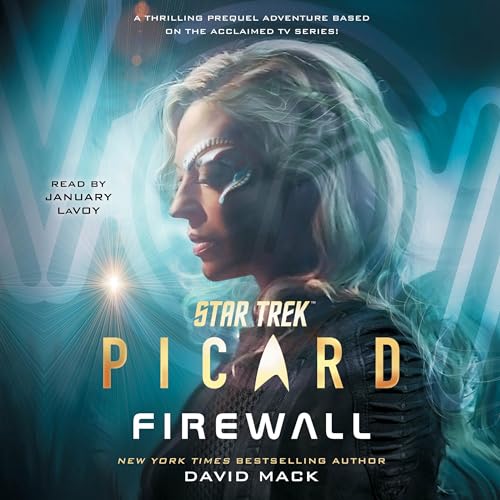
Star Trek Picard: Firewall

A woman walks into a bar and inquires of the Fenris Ranger therein how she herself might join the rangers.

This is how David Mack’s Star Trek Picard: Firewall opens. The novel bears some comparison to Una McCormack’s Star Trek Picard: Second Self, which I wrote about previously. Like Second Self, the audio version of Firewall is narrated by January LaVoy, the extraordinary narrator of a thousand voices. Her Kathryn Janeway is so authentic you’d be forgiven for thinking they’d brought in Kate Mulgrew to speak the part. Not only can she pull off many voices, but LaVoy is an amazing actor who delivers a full gamut of emotions.
Star Trek Picard: Firewall

As I’ve mentioned before, I’m not generally a fan of spin-off novels. But, like Second Self, Firewall very pleasantly surprised me. It’s reads like it’s written for adults with some very mature themes, including genocide and food as a weapon. Both remain depressingly apropos to the times in which we live.

Whereas Second Self is concerned with Raffi (Raffaela Musiker), Firewall explores the history of the other side of the coin, Seven of Nine, and takes us from Voyager’s return up to the events of Star Trek Picard. Seven of Nine’s growth is a joy to behold. Early on, we see her at her lowest: rejected from Star Fleet Academy because of her history with the Borg; lost; working at menial jobs; seeking human contact in whatever form she can. Things change when she becomes involved with a Fenris Ranger operation. She begins to grow personally, as a tactician, and as a leader. She comes to believe in her own competency.

I appreciate the fact that, for the vast majority of the book, there are few prerequisites. It is helpful to know something about Seven of Nine from her time on Voyager, and her relationship with Captain Janeway. Still, there’s a reveal in the book and I could tell it was meant to be a big deal. Sadly, it went right over my head. My reaction was, Huh? I’m a fan, you see, but not a “super” fan. Not of Star Trek or any other fandom, to be honest. Thankfully, we have the Memory Alpha wiki and that set that to rights.

The bottom line is that I highly recommend Star Trek Picard: Firewall. The prose is a pleasure to read, and the story is very exciting and very touching. And it’s Star Trek. What more could you ask for?

Star Trek Picard: Second Self

I knew a guy who, before purchasing a book, read the last couple of pages. Why would you do that? I asked him. Wouldn’t that spoil the whole thing? Because, he said, why would I read a book if I don’t like the ending?

Fast forward to the present, where I’ve been listening to January LaVoy’s narration of Una McCormack’s Star Trek Picard: Second Self. I started at the beginning, but even before reaching the end, I knew that I could recommend this book without hesitation. Doubly true now that I’ve listened to the whole thing.

To be honest, I don’t often enjoy spin-off novels. There are exceptions, most notably Timothy Zahn’s Thrawn trilogy. And there are others I’ve enjoyed, including some Star Trek and Doctor Who novels, but Second Self is something special. Why is that?

Well, for one thing, it’s clearly a book for adults, or at least for the older YA crowd, with its mature themes of war-time atrocities and drug addiction. This book has other things going for it. Motivations are clear. There is a lot of inner dialog which expands our appreciation of Raffi’s (Raffaela Musikerz) character. Backstory, of which Star Trek has untold volumes, is provided as required without overwhelming the current story.

Second Self concerns Raffi, who, at the behest of Admiral Jean-Luc Picard, undertakes an off-books mission to bring a war criminal to justice. The problem is, intelligence reports have the criminal last seen on Ordeve, a planet with which Raffi has unhappy associations. The focus of the book later shifts to Raffi’s earlier time on Ordeve, and then to events that occurred before that. It’s a good story-telling technique, motivating us to understand what went before.

Aside from the very effective prose, there’s January LaVoy’s exquisite narration, with so many voices that you’d almost swear that this was a full-cast audio. I’ll be looking for more audio books narrated by this voice actor.

To be honest, I picked up this audio book because it was on sale. Now that I’ve listened to it, I would happily pay full price. Pick up a copy or listen to the audio version. If you enjoy Star Trek, you’ll be glad you read Second Self.

Plotting Backwards and Forward

Contains major spoilers for Star Trek: Picard

In the commentary for Serenity, the movie follow-on to the short lived and much beloved series Firefly, Joss Whedon became particularly animated at the pivotal moment when we see River posed with a pair of axes while, strewn around her, lay the bodies of fallen Reavers.

This moment, it seems, was the starting point, the inspiration for the entire movie. And it was the climax. From that moment, Whedon worked backwards, answering for himself the question, “What led to this point?”

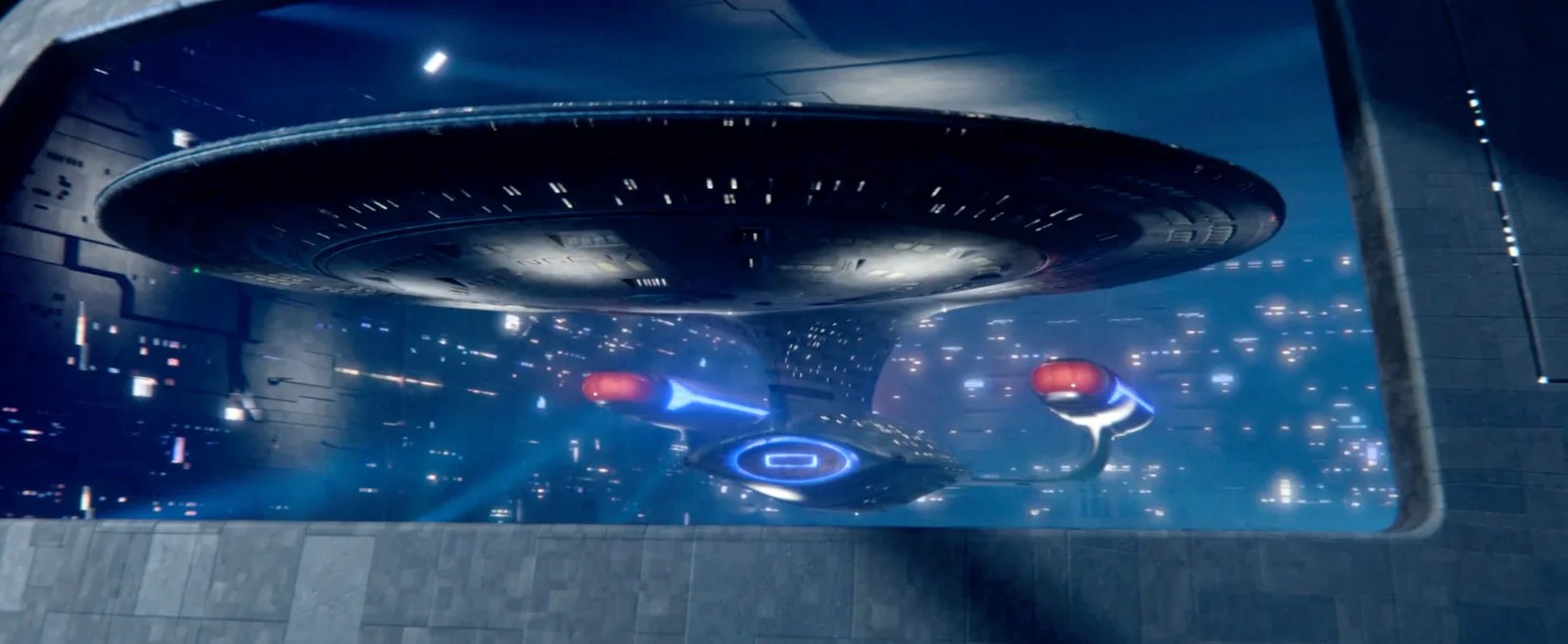
I suspect the plot for Star Trek: Picard S3 was similarly driven by the moment when the reunited TNG crew exited space dock in a newly reconstituted Enterprise-D. This was the moment the writers had to get to. Now, what led to it?

There would have been many questions. Why would they need an old, Galaxy-class starship? Well, they would need it if there was a problem with the newer models. What problem? And so on. The Enterprise-D launches in episode 9 of 10, and I would argue that, no matter what happens in episode 10, this represents the climax of the story. The rest — stopping the Borg attack, expunging the Borg portion of the young drones, rescuing Jack — is part of the tidying up that has to happen before we let our heroes go forth to Live Long and Prosper.

All this to say that a good story doesn’t necessarily stem from a vision of the start of it all. You might think of a moment that occurs at the end of Act 1, Act2 or near the end of Act 3. It doesn’t matter. From that moment, you can work backwards and forwards until your story is complete.

One last comment about Star Trek. I was never a huge fan of TNG (he says to the sound of collected gasps). But there certainly were some classic episodes, in particular, “All Good Things”, “The Inner Light”, “Yesterday’s Enterprise”, and “The Best of Both Worlds.” Star Trek: Picard S3, meanwhile, all of it, is a Very Good Story. In fact, I would argue, as of episode 9, that it represents the best that Star Trek has ever been. Why is that? Because of the story. Because of the script. A because the cast has matured into actors who can believably portray complex emotions and pull us along with them.