Tag Archives: Star Trek

Star Trek: Strange New Worlds: Asylum

Star Trek: Strange New Worlds: Asylum, by Una McCormack, is the third Star Trek audio book I’ve listened to this year. It is very much a character-based story, and features Una Chin-Riley in two time periods: on the “present day” Enterprise with Christopher Pike in command, and 25 years earlier, when Chin-Riley was a senior cadet at Starfleet Academy.

As an aside, I’m glad they gave Number One a name—really, they had to, didn’t they?—and I think they picked a perfect name, but after decades of knowing her as Number One, referring to her as Una is, well, a process.

Back at Starfleet Academy, Ensign Christopher Pike, who is on leave pending an investigation of an incident in which he was involved, is giving some lectures on what life is really like “out there.” Pelia, who is one of Chin-Riley’s instructors, encourages her to sit in on Pike’s lectures. She does so, and after a rocky start, they become fast friends.

Meanwhile, Chin-Riley’s roommate is involved with Federation asylum seekers, specifically, a family of Euxhana, a cultural and ethnic minority on Chionia. When Chin-Riley learns about them, she becomes interested and gets involved as well. In the present day, the Enterprise is hosting trade negotiations between the Federation and the Chionian government. And here is where the underlying theme of this book comes in. For the treatment of the Euxhana reflects the treatment of Indigenous peoples in North America, with the Chionians removing the Euxhana from their traditional territories, and attempting to erase their culture and language. The difference is that the treatment of our Indigenous peoples was much worse.

It is worth pointing out that, since the beginning, Star Trek has been a vehicle for exploring social issues of the day. At the time, they got away with it because it was set in space in the future, not Earth in the 20th Century. So, there were episodes dealing with racism, mutual assured destruction, the impact of artificial intelligence, and others. In fact, every time Uhuru appeared onscreen in the 1960’s, a Black woman on the bridge of a starship, that was social commentary. It’s also worth pointing out that “Asylum” isn’t the first Star Trek story to deal with the treatment of Indigenous peoples. This was also explored in the Next Generation episode, “Journey’s End.” To sum up, if you prefer your Star Trek to be free of social commentary, this isn’t the story for you. But if, like me, you feel that social commentary is at the heart of Star Trek, you’ll be well rewarded.

In the present day, Chin-Riley tries very hard to put right a bad choice she made in the academy with regard to the Euxhana refugees. This is the tension at the heart of the story and contributes to the immense readability of this well-written book.

Meanwhile, the audio version of Asylum is ably narrated by Robert Petkoff. Among his many voices, he captures the cool-under-fire persona of Christopher Pike particularly well. Also, believe it or not, he does an amazing Pelia. Overall, his narration is excellent and highly recommended, as is the book as a whole.
Star Trek Picard: Firewall

A woman walks into a bar and inquires of the Fenris Ranger therein how she herself might join the rangers.

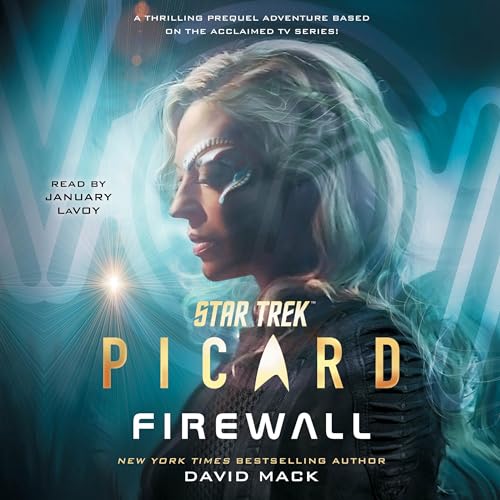
This is how David Mack’s Star Trek Picard: Firewall opens. The novel bears some comparison to Una McCormack’s Star Trek Picard: Second Self, which I wrote about previously. Like Second Self, the audio version of Firewall is narrated by January LaVoy, the extraordinary narrator of a thousand voices. Her Kathryn Janeway is so authentic you’d be forgiven for thinking they’d brought in Kate Mulgrew to speak the part. Not only can she pull off many voices, but LaVoy is an amazing actor who delivers a full gamut of emotions.

Star Trek Picard: Firewall

As I’ve mentioned before, I’m not generally a fan of spin-off novels. But, like Second Self, Firewall very pleasantly surprised me. It’s reads like it’s written for adults with some very mature themes, including genocide and food as a weapon. Both remain depressingly apropos to the times in which we live.

Whereas Second Self is concerned with Raffi (Raffaela Musiker), Firewall explores the history of the other side of the coin, Seven of Nine, and takes us from Voyager’s return up to the events of Star Trek Picard. Seven of Nine’s growth is a joy to behold. Early on, we see her at her lowest: rejected from Star Fleet Academy because of her history with the Borg; lost; working at menial jobs; seeking human contact in whatever form she can. Things change when she becomes involved with a Fenris Ranger operation. She begins to grow personally, as a tactician, and as a leader. She comes to believe in her own competency.

I appreciate the fact that, for the vast majority of the book, there are few prerequisites. It is helpful to know something about Seven of Nine from her time on Voyager, and her relationship with Captain Janeway. Still, there’s a reveal in the book and I could tell it was meant to be a big deal. Sadly, it went right over my head. My reaction was, Huh? I’m a fan, you see, but not a “super” fan. Not of Star Trek or any other fandom, to be honest. Thankfully, we have the Memory Alpha wiki and that set that to rights.

The bottom line is that I highly recommend Star Trek Picard: Firewall. The prose is a pleasure to read, and the story is very exciting and very touching. And it’s Star Trek. What more could you ask for?

Star Trek Picard: Second Self

I knew a guy who, before purchasing a book, read the last couple of pages. Why would you do that? I asked him. Wouldn’t that spoil the whole thing? Because, he said, why would I read a book if I don’t like the ending?

Fast forward to the present, where I’ve been listening to January LaVoy’s narration of Una McCormack’s Star Trek Picard: Second Self. I started at the beginning, but even before reaching the end, I knew that I could recommend this book without hesitation. Doubly true now that I’ve listened to the whole thing.

To be honest, I don’t often enjoy spin-off novels. There are exceptions, most notably Timothy Zahn’s Thrawn trilogy. And there are others I’ve enjoyed, including some Star Trek and Doctor Who novels, but Second Self is something special. Why is that?

Well, for one thing, it’s clearly a book for adults, or at least for the older YA crowd, with its mature themes of war-time atrocities and drug addiction. This book has other things going for it. Motivations are clear. There is a lot of inner dialog which expands our appreciation of Raffi’s (Raffaela Musikerz) character. Backstory, of which Star Trek has untold volumes, is provided as required without overwhelming the current story.

Second Self concerns Raffi, who, at the behest of Admiral Jean-Luc Picard, undertakes an off-books mission to bring a war criminal to justice. The problem is, intelligence reports have the criminal last seen on Ordeve, a planet with which Raffi has unhappy associations. The focus of the book later shifts to Raffi’s earlier time on Ordeve, and then to events that occurred before that. It’s a good story-telling technique, motivating us to understand what went before.

Aside from the very effective prose, there’s January LaVoy’s exquisite narration, with so many voices that you’d almost swear that this was a full-cast audio. I’ll be looking for more audio books narrated by this voice actor.

To be honest, I picked up this audio book because it was on sale. Now that I’ve listened to it, I would happily pay full price. Pick up a copy or listen to the audio version. If you enjoy Star Trek, you’ll be glad you read Second Self.

Plotting Backwards and Forward

Contains major spoilers for Star Trek: Picard

In the commentary for Serenity, the movie follow-on to the short lived and much beloved series Firefly, Joss Whedon became particularly animated at the pivotal moment when we see River posed with a pair of axes while, strewn around her, lay the bodies of fallen Reavers.

This moment, it seems, was the starting point, the inspiration for the entire movie. And it was the climax. From that moment, Whedon worked backwards, answering for himself the question, “What led to this point?”

I suspect the plot for Star Trek: Picard S3 was similarly driven by the moment when the reunited TNG crew exited space dock in a newly reconstituted Enterprise-D. This was the moment the writers had to get to. Now, what led to it?

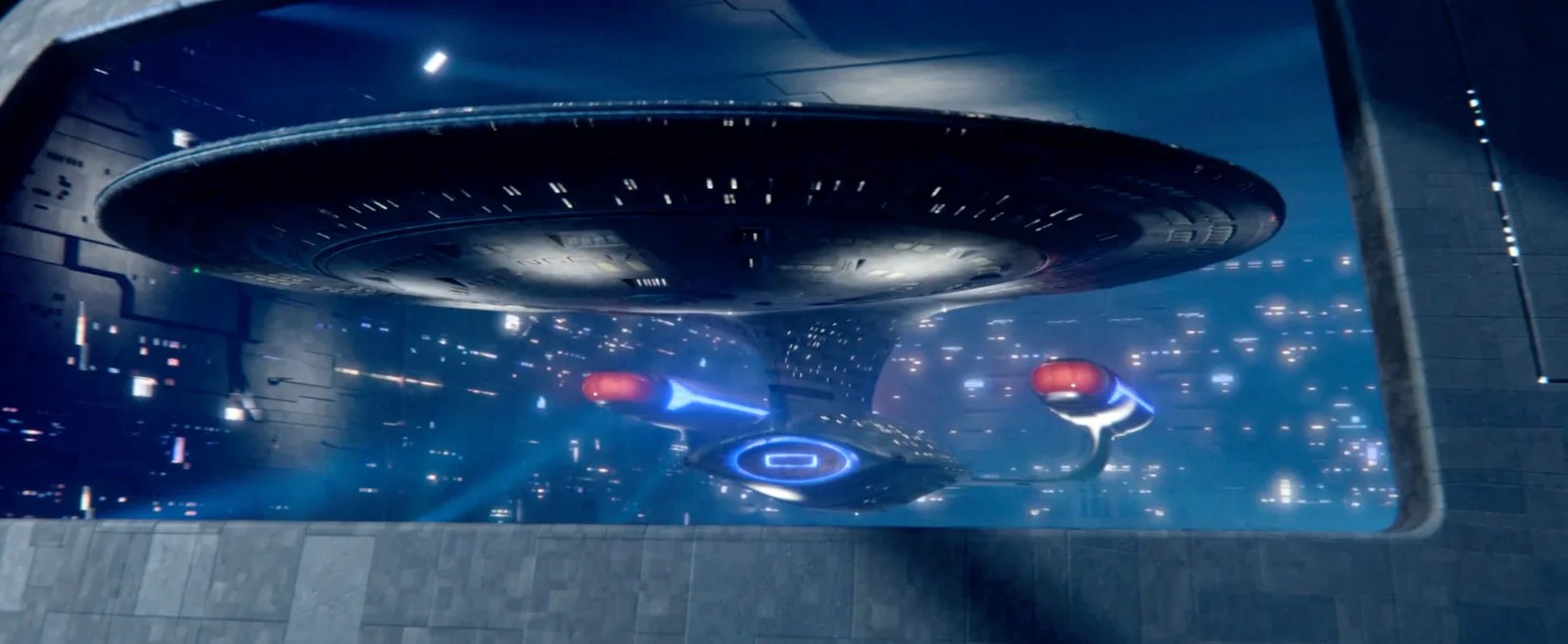
There would have been many questions. Why would they need an old, Galaxy-class starship? Well, they would need it if there was a problem with the newer models. What problem? And so on. The Enterprise-D launches in episode 9 of 10, and I would argue that, no matter what happens in episode 10, this represents the climax of the story. The rest — stopping the Borg attack, expunging the Borg portion of the young drones, rescuing Jack — is part of the tidying up that has to happen before we let our heroes go forth to Live Long and Prosper.

All this to say that a good story doesn’t necessarily stem from a vision of the start of it all. You might think of a moment that occurs at the end of Act 1, Act2 or near the end of Act 3. It doesn’t matter. From that moment, you can work backwards and forwards until your story is complete.

One last comment about Star Trek. I was never a huge fan of TNG (he says to the sound of collected gasps). But there certainly were some classic episodes, in particular, “All Good Things”, “The Inner Light”, “Yesterday’s Enterprise”, and “The Best of Both Worlds.” Star Trek: Picard S3, meanwhile, all of it, is a Very Good Story. In fact, I would argue, as of episode 9, that it represents the best that Star Trek has ever been. Why is that? Because of the story. Because of the script. A because the cast has matured into actors who can believably portray complex emotions and pull us along with them.

The Revisited Frontier

I’d like to tell you a story, a true one, about Star Trek: The Motion Picture.

STTMP was released in December 1979, a decade after the TV show was canceled. Up until then, those of us who loved Trek had been subsisting on reruns and novels. The first Trek novel was fittingly written by James Blish, who had novelized the TV episodes. Spock Must Die was derivative but with a twist and it was an enjoyable read. I recall tremendously enjoying The Price of the Phoenix by Sondra Marshak and Myrna Culbreath, a book that made clear the untapped potential of Star Trek.

But then word came that a movie was in the offing, and fans held their collective breath. This was in the wake of the massive success of Star Wars, and the studios were looking for intellectual property they could leverage to reach similar heights. Science fiction movies, after all, were suddenly “in”, and a Star Trek movie must have seemed a no-brainer.

Ottawa’s Elgin Theatre

And so, after a long buildup and a seemingly endless wait, it was released. In Ottawa, Star Trek: The Motion Picture opened at the Elgin theatre downtown. This was in the days before cineplexes. When you entered a movie theatre, there was a small area in which you could purchase tickets and snacks, and then you proceeded directly to the auditorium. When there was a lineup, you waited outside. Now, we’re talking about Ottawa in December in the 1970’s. Winters were very cold. There was a lot of snow. And the night my roommate and I walked to the theatre, it was cold and dark with tall piles of snow all around us. As it turned out, although we arrived early, the showing was sold out. So we and a lot of other people stood outside and waited to get into the next one. Why? Because this was STAR TREK. And we were highly motivated. And young. That helps too.

I want to emphasize, in case it isn’t obvious, that the audience was really was up for this. I don’t mean that expectations were sky high, but rather, that it would have been easy to make us happy. An above average episode would have done it.

After a long wait in the cold winter night, we took our seats. The lights dimmed, and there was applause before the movie even left dry dock. The opening credits rolled on the screen. William Shatner. YAY! Leonard Nimoy. YAY! And so on.

Sadly, that enthusiasm waned rather quickly, and at times the audience laughed at the movie. Not with the movie. At the movie. “[Bones.] I need you. Badly.” Laughter. Later on, “You mean this machine wants to physically join with a human?” Decker and Illia exchange longing glances. Laughter. There were probably other examples, I don’t remember. In the end, as the grumbling, disappointed audience left their seats, the feeling was that the plot was derivative (see the episode “The Changling”), the script was wooden, and the actors spent far too much time staring out the window in wonder.

William Shatner was among those unhappy with the result. After The Wrath of Khan was released to near rapturous reviews, he pointed out that STTMP had a much higher budget (in fact, it was the most expensive movie ever made at the time) but “it wasn’t a good movie.” His words. TWoK, he said, had a smaller budget, but was a much better one.

There are some positives, of course. One review at the time said that STTMP was nearer in tone to 2001: A Space Odyssey than to Star Wars, and that this was the ultimate compliment. In retrospect, it’s quite something to see the cast looking so young and fit. William Shatner had gained quite a bit of weight after Star Trek was cancelled, but to his credit he got himself back in fighting trim for the movie. There were certainly some amazing visuals. In the Director’s Edition, the special effects were completed and missing scenes reinserted. These helped to make sense of the thing. In particular, the scene where Spock realizes that V’ger is incapable of understanding the simplest (of human) feelings was one of the best in the revised movie.

If you like STTMP, I’m not trying to tell you that you’re wrong, not by any means. Obviously, there is no concept of wrong. Art touches everybody differently. But I have to be honest and say I’m puzzled by the number of very positive comments I’ve seen lately, particularly since the 4K version was released. I’m well aware that a movie shot on film can appear quite spectacular in 4K, but improving the visuals does nothing to solve the problems listed above. For a generation who was hungry for more Trek, we who viewed the film upon its release felt that STTMP limped out of dry dock on impulse power alone. The Enterprise didn’t achieve warp speed until the release of The Wrath of Khan.

He Was Spock

Leonard Nimoy was many things, actor, director, photographer, author, even singer. But above all, for those of us who knew him only by his work, he was Spock.

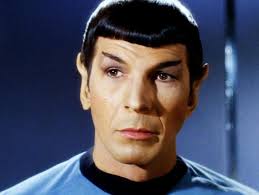
SpockThe genius of Nimoy was that, when he played Spock, the actor seemed to disappear. There was only Spock. And we loved Spock. Spock was supremely logical, but let the mask of logic slip just enough to let us know when he was angry, bemused or exasperated. He, Kirk, and McCoy formed the perfect trinity of logic, intuition and emotion.

Nimoy made an appearance via Skype at last summer’s Ottawa Comiccon, an appearance that Karl Urban (McCoy in the new movies) crashed, to Nimoy’s amusement. I wish I could have been there. I recently visited Los Angeles, and saw the handprints left by the cast of the original Star Trek. Nimoy’s of course, formed a Vulcan greeting. Though at one time he wrote I am not TOS SidewalkSpock, he came to embrace the role for which he was so loved, and later wrote a  book called I am Spock.

My favourite Spock episode? The Menagerie, in which Spock, still loyal to his former Captain, risks his career to help return Pike to a planet declared off-limits by the Federation. Another favourite was his fabulous return to the role in Star Trek, the 2009 movie. Then there’s the the famous Audi commercial he filmed with Zachary Quinto. What a great sport he was.

What else is there to say except

LLAP